Wie viel Kalium du wirklich am Tag brauchst
Die empfohlene Zufuhr liegt bei 3.400 mg am Tag für Männer und 2.600 mg für Frauen, und die meisten liegen weit darunter. Die Zahlen, warum Kalium und Natrium fürs Blutdruck als Paar wirken, warum Präparate gedeckelt sind und wer es wirklich begrenzen muss.
- 01
Das Ziel: 3.400 mg Männer, 2.600 mg Frauen
Die empfohlene Zufuhr für Kalium liegt bei 3.400 mg am Tag für erwachsene Männer und 2.600 mg für Frauen, von US-Behörden 2019 von der älteren Zahl 4.700 mg aktualisiert, die auf manchen Lebensmitteletiketten noch erscheint (NIH ODS). Es gibt keinen formalen Tagesbedarf, weil die Daten nicht ausreichten, um einen zu setzen. Das sind erhebliche Zahlen, die eine wirklich gemüse-, obst- und hülsenfruchtreiche Kost erfordern, weshalb die meisten, die mehr verarbeitete Lebensmittel essen, weit unter dem Ziel liegen.
- 02
Die meisten liegen zu niedrig
Nationale Erhebungen zeigen beständig, dass die durchschnittliche Kaliumzufuhr für die meisten Erwachsenen unter der empfohlenen Zufuhr liegt, weil sie eine um Vollwert-Pflanzenkost und Milchprodukte statt verarbeitete Lebensmittel gebaute Kost erfordert (NIH ODS). Dieser Engpass zählt, weil Kalium einer der am stärksten mit dem Blutdruck verbundenen Nährstoffe ist. Anders als bei vielen Nährstoffen, bei denen die Sorge der Überschuss ist, ist Kalium einer, bei dem das realistische Problem für die Allgemeinbevölkerung ist, nicht genug zu bekommen, was es zu einem Mineralstoff macht, den man priorisieren sollte.
- 03
Kalium und Natrium: ein Blutdruckpaar
Kalium wirkt als Gegengewicht zum Natrium: es hilft den Nieren, Natrium auszuscheiden, und entspannt die Blutgefäßwände, eine höhere Kaliumzufuhr ist also beständig mit niedrigerem Blutdruck und geringerem Schlaganfallrisiko verbunden (NIH ODS). Deshalb hebt das DASH-Ernährungsmuster das Kalium gezielt, während es das Natrium senkt, und deshalb sind die beiden am besten als Verhältnis statt getrennt zu betrachten. Kaliumreiche Lebensmittel zu erhöhen ist neben dem Senken von Natrium einer der am besten evidenzgestützten Ernährungsschritte fürs Blutdruck.
- 04
Aus Lebensmitteln holen, nicht aus Präparaten
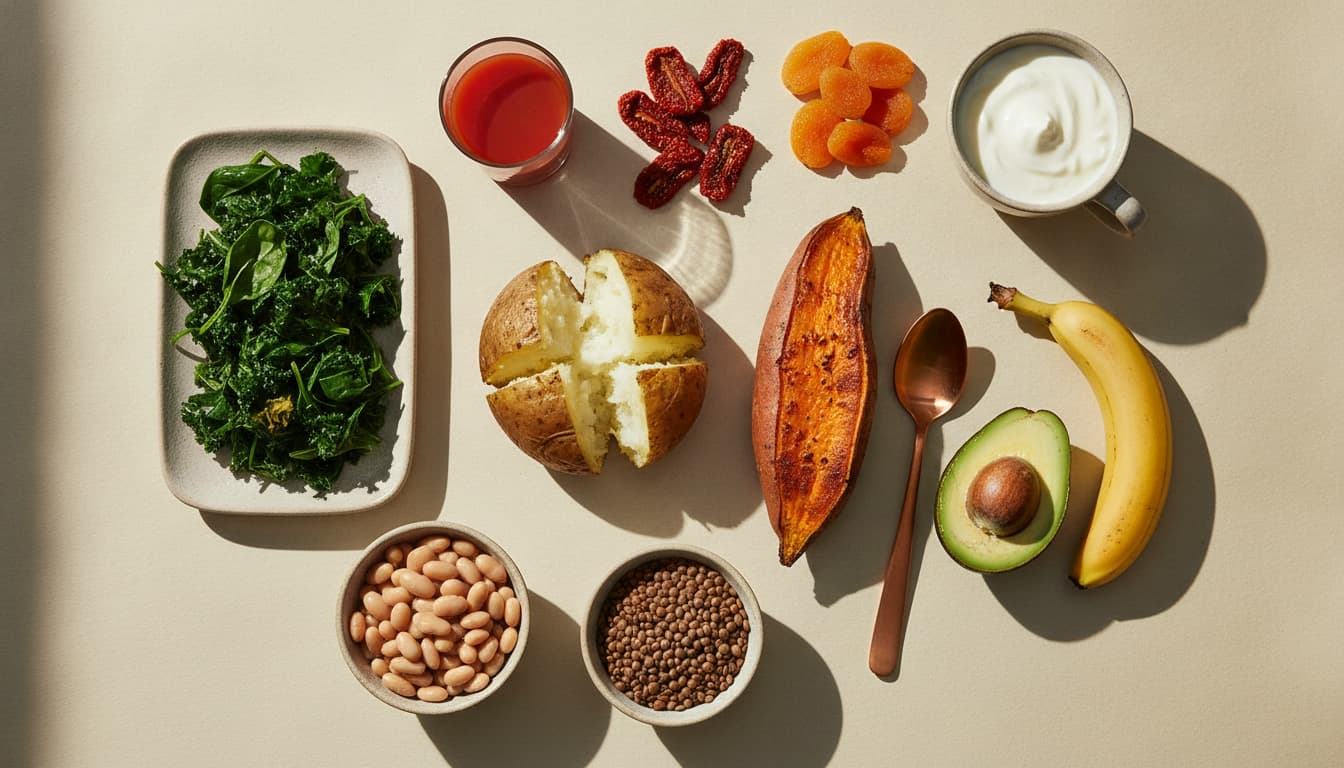
Kalium wird am besten aus Lebensmitteln bezogen: Kartoffeln mit Schale, Bohnen und Linsen, Blattgemüse, Tomatenprodukte, Milchprodukte, Fisch, Avocado und Obst wie Bananen, Orangen und getrocknete Aprikosen (NIH ODS; USDA). Lebensmittel liefern Kalium neben Ballaststoff und anderen Nährstoffen, es über die Ernährung zu erhöhen verbessert das Essen also insgesamt. Rezeptfreie Präparate sind absichtlich auf eine niedrige Dosis gedeckelt, meist 99 mg, weil eine große, schnelle Kaliumlast den Herzrhythmus stören kann, das ist also kein Nährstoff zum Megadosieren.
- 05
Salzersatz: eine Kaliumquelle mit Vorbehalt
Kaliumchlorid-Salzersatz ist ein Weg, Kalium zu erhöhen und zugleich Natrium zu senken, und große Studien deuten an, dass er auf Bevölkerungsebene Blutdruck und kardiovaskuläre Ereignisse senken kann (NIH ODS). Doch er kommt mit demselben Vorbehalt wie Präparate: für Menschen mit Nierenkrankheit oder unter bestimmten Blutdruckmedikamenten kann das zusätzliche Kalium gefährlich sein. Für gesunde Menschen kann er ein nützliches Werkzeug sein, doch wer in einer Hochrisikogruppe ist, sollte vor regelmäßiger Nutzung einen Arzt fragen.
- 06
Wer Kalium stattdessen begrenzen muss
Die wichtige Ausnahme läuft dem allgemeinen Rat entgegen. Menschen mit chronischer Nierenkrankheit oder solche unter bestimmten Blutdruckmedikamenten wie ACE-Hemmern, ARB oder kaliumsparenden Entwässerungsmitteln können überschüssiges Kalium nicht klären, und hohes Blutkalium (Hyperkaliämie) kann gefährliche Herzrhythmusprobleme verursachen (NIH ODS). Diesen Gruppen wird geraten, Kalium unter ärztlicher Begleitung zu begrenzen, manchmal gerade die kaliumreichen Lebensmittel zu meiden, die allen anderen empfohlen werden. Für sie ist Kalium ein Mineralstoff, den man sorgfältig beobachten, nicht maximieren sollte.
Was als Nächstes gefragt wird.
- Wie viel Kalium brauche ich am Tag?
- Die empfohlene Zufuhr liegt bei 3.400 mg am Tag für erwachsene Männer und 2.600 mg für Frauen (NIH ODS). Das ersetzte die ältere Zahl 4.700 mg, die auf manchen Lebensmitteletiketten noch erscheint. Es gibt keinen formalen Tagesbedarf, weil die Daten nicht ausreichten, um einen zu setzen. Das sind erhebliche Ziele, die eine gemüse-, obst-, hülsenfrucht- und milchproduktreiche Kost erfordern, weshalb die meisten, die mehr verarbeitete Lebensmittel essen, sie nicht erreichen.
- Warum bekommen die meisten nicht genug Kalium?
- Weil das Erreichen des Ziels eine Kost erfordert, die wirklich um Vollwert-Pflanzenkost und Milchprodukte gebaut ist, und typische Ernährungsweisen mit viel verarbeiteten Lebensmitteln liegen darunter (NIH ODS). Kalium steckt konzentriert in Kartoffeln, Bohnen, Blattgemüse, Milchprodukten, Fisch und Obst, Lebensmitteln, die viele nicht in ausreichend großen Mengen essen. Nationale Erhebungen zeigen beständig eine durchschnittliche Zufuhr unter der empfohlenen Zufuhr, was Kalium zu einem der wenigen Nährstoffe macht, bei denen das realistische Problem für die meisten ein Mangel statt ein Überschuss ist.
- Senkt Kalium den Blutdruck?
- Eine höhere Kaliumzufuhr ist beständig mit niedrigerem Blutdruck und geringerem Schlaganfallrisiko verbunden, weil Kalium als Gegengewicht zum Natrium wirkt und den Nieren hilft, Natrium auszuscheiden, und die Blutgefäßwände entspannt (NIH ODS). Deshalb hebt die DASH-Diät das Kalium gezielt, während sie das Natrium senkt. Die beiden Mineralstoffe wirken am besten als Verhältnis betrachtet, und kaliumreiche Lebensmittel zu erhöhen ist neben dem Senken von Natrium einer der am besten evidenzgestützten Ernährungsschritte fürs Blutdruck.
- Kann man ein Kaliumpräparat nehmen, um das Ziel zu erreichen?
- Nicht leicht, weil rezeptfreie Kaliumpräparate absichtlich auf eine niedrige Dosis gedeckelt sind, meist 99 mg, weit unter dem Tagesziel (NIH ODS). Behörden begrenzen sie, weil eine große, schnelle Kaliumlast den Herzrhythmus stören kann. Das ist Absicht: Kalium soll aus Lebensmitteln kommen, wo es allmählich neben anderen Nährstoffen geliefert wird. Für die Allgemeinbevölkerung bedeutet das Erreichen des Ziels, mehr kaliumreiche Lebensmittel zu essen, nicht Pillen zu nehmen.
- Wer muss Kalium begrenzen?
- Menschen mit chronischer Nierenkrankheit und solche, die bestimmte Blutdruckmedikamente wie ACE-Hemmer, ARB oder kaliumsparende Entwässerungsmittel nehmen, müssen Kalium begrenzen (NIH ODS). Ihre Nieren können den Überschuss nicht klären, und hohes Blutkalium, Hyperkaliämie genannt, kann gefährliche Herzrhythmusprobleme verursachen. Diesen Gruppen wird geraten, Kalium unter ärztlicher Begleitung zu beschränken, manchmal die kaliumreichen Lebensmittel zu meiden, die allen anderen empfohlen werden. Für gesunde Menschen mit normaler Nierenfunktion gilt das Gegenteil: die meisten brauchen mehr, nicht weniger.
Jede Aussage, belegt.
Das Larderlab-Team entwickelt evidenzbasierte Rahmenwerke fürs Essen, Trainieren und Bestücken einer Küche. Wir belegen jede Aussage. Wir veröffentlichen die Tabelle, wo möglich. Wir kaufen, was wir testen, zum Ladenpreis. Wenn neue Daten erscheinen, überarbeiten wir mit einer datierten Notiz.
Als Nächstes in diesem Ressort.
Laborgeprüfte Nahrungsergänzungsmittel: was eine Zertifizierung wirklich prüft
Nahrungsergänzungsmittel werden von der FDA vor dem Verkauf nicht auf Sicherheit und Wirksamkeit zugelassen. In einer Analyse von 57 pflanzlichen Sportprodukten enthielten 40 Prozent keine nachweisbare Menge des deklarierten Inhaltsstoffs, 12 Prozent eine verbotene Substanz.
13 Min. · Rev. 2026-09-04Hat Gatorade Elektrolyte? Die Milligramm pro Flasche im Vergleich
Ja: rund 460 mg Natrium und 130 mg Kalium pro Liter nach USDA-Markendaten. Gegen einen American-Football-Spieler gerechnet, der stündlich etwa 1.290 mg Natrium verliert, erklären die Zahlen, wofür das Getränk taugt und wofür nicht.
8 Min. · Rev. 2026-08-20Bestes Creatin-Monohydrat, sortiert nach $/Gramm
Creapure-zertifiziertes Creatin sortiert nach $/Gramm, mit Status der Tests durch Dritte und Markentransparenz.
10 Min. · Rev. 2026-04-21Holen Sie sich den Larderlab-Makroplaner.
Ein Google Sheet, das Ihren Proteinbedarf berechnet, ihn auf 3-5 Mahlzeiten verteilt und 20 Proteinquellen nach $/Gramm sortiert. Kostenlos. Kopieren und nach Belieben anpassen.
Mit der Anmeldung stimmen Sie unserer Datenschutzerklärung zu. Jederzeit kündbar.