Foods high in biotin, ranked by micrograms
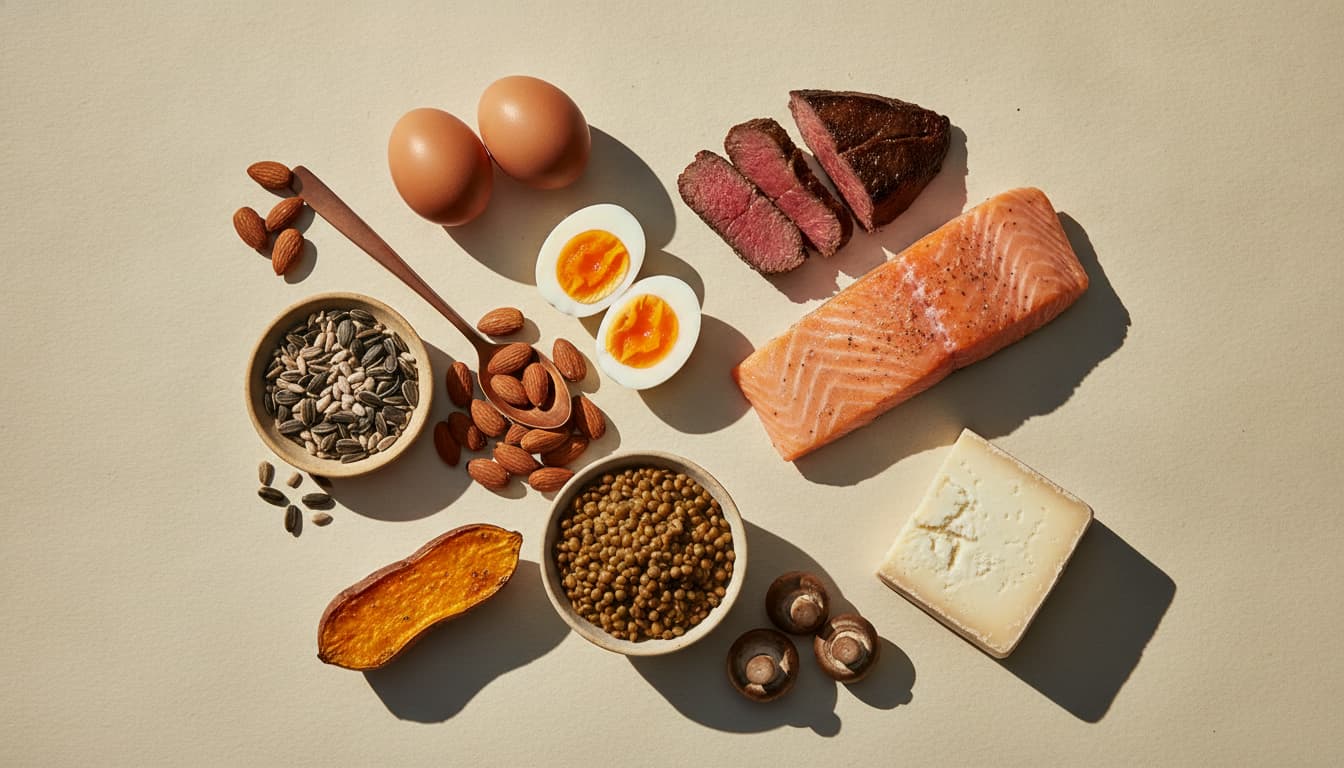
The adequate intake is just 30 mcg a day, and beef liver, eggs, and salmon cover it easily. The mcg-per-serving ranking, why deficiency is rare, why raw egg whites work against you, and why hair-growth megadoses are mostly wasted.
- 01
Beef liver: ~30 mcg per 3 oz, a full day
Beef liver tops the biotin list at ~30 mcg per 3 oz, an entire day's adequate intake in one modest serving, consistent with its status as one of the most nutrient-dense foods for the B vitamins generally (NIH ODS; USDA). It is eaten in small amounts and not universally liked, but for anyone who does eat it, biotin is a non-issue. For everyone else, the eggs and fish below it clear the tiny 30 mcg target just as easily across a normal day.
- 02
Eggs: ~10 mcg per whole cooked egg
One whole cooked egg carries ~10 mcg of biotin, a third of the daily target, almost all of it concentrated in the yolk (USDA FoodData Central). The key detail is cooking: raw egg white contains avidin, a protein that binds biotin and blocks its absorption, so eating many raw whites over time is one of the few genuine causes of deficiency. Cooking denatures avidin and eliminates the problem, so a cooked egg is a clean, reliable source.
- 03
Salmon, pork, and other meats: ~2-5 mcg per 3 oz
Salmon supplies ~5 mcg of biotin per 3 oz, with pork, beef, and other fish contributing a few micrograms each (NIH ODS). None is a standout given the tiny requirement, but eaten across normal meals they form a steady background contribution that, combined with eggs and gut-bacteria synthesis, keeps most people comfortably above the 30 mcg mark without any thought.
- 04
Sunflower seeds, almonds, and nuts: ~1.5-2.6 mcg per serving
Sunflower seeds carry ~2.6 mcg of biotin per ounce and almonds ~1.5 mcg, making them the leading plant snacks for the vitamin (USDA). They matter most for vegetarians and vegans, for whom eggs are off the table, though even then the low target means a varied plant diet with seeds, nuts, sweet potato, and legumes reaches it. As with the other B vitamins, seeds quietly stack biotin with vitamin E and magnesium.
- 05
Sweet potato, spinach, and legumes: ~1-2.4 mcg per serving
A cooked sweet potato provides ~2.4 mcg of biotin, with spinach, broccoli, and legumes adding around a microgram each (NIH ODS; USDA). These are the plant staples that round out intake on a meat-light diet. No single serving is large, but the combination across a day, together with the vitamin made by gut bacteria, explains why biotin deficiency is essentially never seen from diet alone in healthy adults.
- 06
Why hair-growth megadoses are mostly wasted
High-dose biotin sold for hair, skin, and nails, typically 5,000 to 10,000 mcg, hundreds of times the requirement, has only shown benefit in people with a real deficiency or a specific brittle-nail condition, not in the general population (NIH ODS). More important, those doses are known to skew many lab tests, including thyroid and heart-attack markers, producing false results, so labs and the FDA advise disclosing biotin use before blood work. For anyone eating eggs and a normal diet, extra biotin has nowhere useful to go.
How this was specified
- 01Inputs measured
- Retail price (dated) · label claim · Certificate of Analysis · third-party test (Informed Sport / NSF / ConsumerLab / Clean Label) · leucine per serving from COA, not marketing.
- 02Protocols tested
- Per-kg target from four literature ranges (IOM RDA, Phillips 2017, Morton 2018, ISSN). Brands scored against Moore 2015 leucine-per-dose threshold (~0.4 g/kg).
- 03Cost-basis verified
- $/gram of protein and $/gram of leucine at warehouse pricing (Costco), mail-order (Amazon), and DTC retail. Re-checked quarterly, flagged when drift exceeds 15%.
- 04Confidence level
- High on ranked order. Medium on absolute $/g (prices drift). Low on serving-size claims where COA is older than 18 months, flagged [VERIFY].
Every claim, cited.
The Larderlab Team builds evidence-led frameworks for eating, lifting, and stocking a kitchen. We cite every claim. We publish the spreadsheet when possible. We buy what we review at retail price. When new data lands, we revise with a dated note.
Next in this hub.
Foods High in Vitamin K: The Densest Sources, by Micrograms
The adequate intake is 120 mcg/day for men and 90 mcg for women, and cooked leafy greens dominate while fermented natto tops the list. The mcg-per-serving ranking, why K1 and K2 count the same, and what people on blood thinners actually need to do.
8 min · rev 2026-07-27Foods High in Vitamin B12: The Densest Sources, by Micrograms
The RDA is 2.4 mcg/day, and clams, beef liver, and oily fish are the densest sources. The mcg-per-serving ranking, why B12 is almost absent from plant foods, and when vegetarians and vegans need a supplement.
8 min · rev 2026-07-07Foods High in Vitamin A: The Densest Sources, by Micrograms
The RDA is 900 mcg RAE for men and 700 mcg for women, and liver, sweet potato, and carrots lead by a wide margin, but preformed retinol from animal foods and beta-carotene from plants are counted differently. The mcg-per-serving ranking, why the two forms are not equal, and the one food to limit.
8 min · rev 2026-07-13Get the Larderlab Macro Planner.
A Google Sheet that calculates your protein target, splits it across 3-5 meals, and ranks 20 protein sources by $/gram. Free. Copy-and-modify your own version.
By subscribing, you agree to our Privacy Policy. Unsubscribe anytime.