Psyllium husk benefits, and why viscosity rather than bulk is the mechanism doing the work
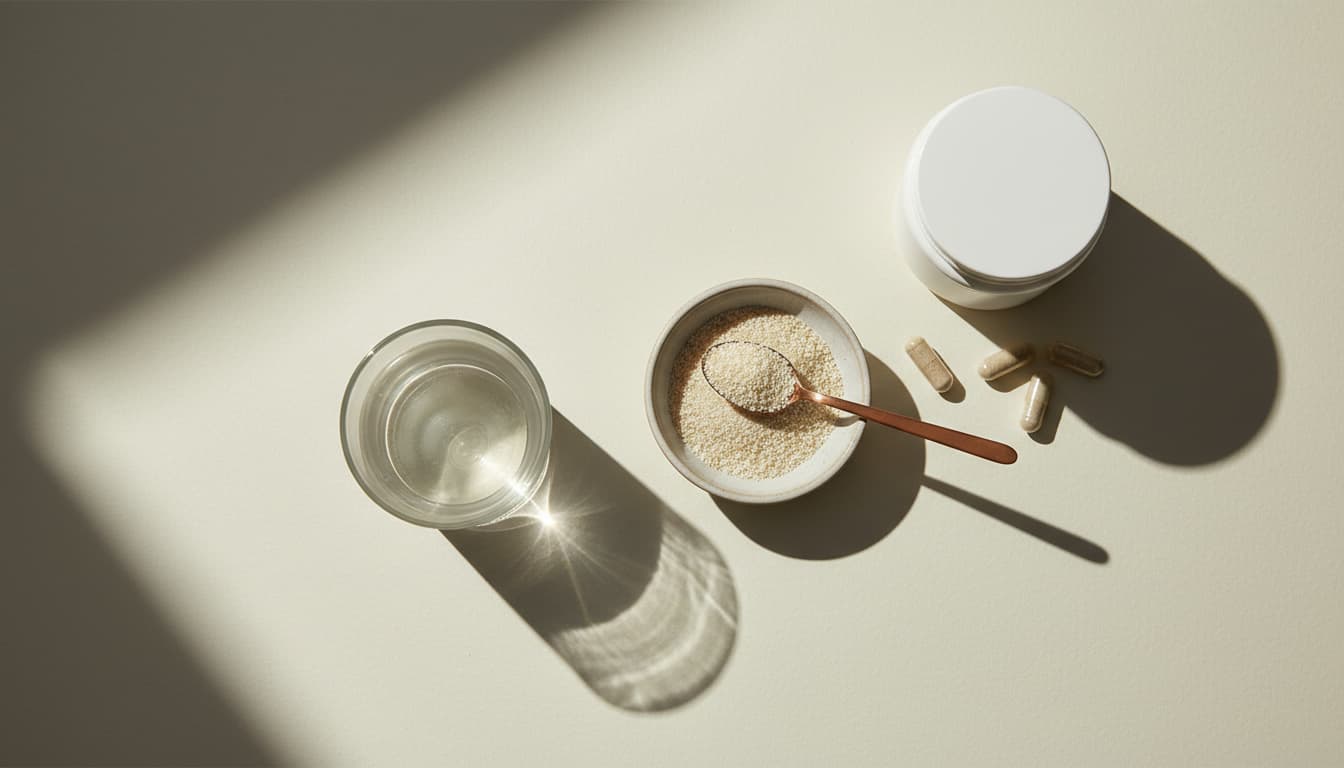
The authorised coronary heart disease claim requires 7 g per day of soluble fiber from psyllium seed husk. Pooled across 28 trials at a median 10.2 g dose, LDL cholesterol fell 0.39 mmol/L and apolipoprotein B fell 0.05 g/L.
- 01
The authorised claim names a dose: 7 g of soluble fiber per day
United States regulation lists daily dietary intake levels of soluble fiber associated with reduced risk of coronary heart disease, and for psyllium the figure is 7 g or more per day of soluble fiber from psyllium seed husk, alongside 3 g or more per day of beta-glucan from whole oats or barley (21 CFR 101.81). A named dose attached to a named outcome in federal regulation is a rarity in this aisle, and it is the number every product should be measured against.
- 02
A qualifying product must clear four separate conditions
To carry the claim, a psyllium food must contain at least 1.7 g of soluble fiber per reference amount customarily consumed, use psyllium husk of no less than 95 percent purity, declare the soluble fiber amount in the nutrition label, and itself meet the nutrient content requirements for low saturated fat, low cholesterol and low fat (21 CFR 101.81). The 1.7 g per serving minimum is the useful one for shoppers: a minimum-compliant product needs at least four servings a day to reach the 7 g target.
- 03
Pooled LDL reduction is 0.39 mmol/L at a median 10.2 g dose
Twenty-eight randomised controlled trials of at least three weeks in 1,924 participants with or without hypercholesterolaemia were pooled by generic inverse variance with random-effects models. A median dose of about 10.2 g of psyllium reduced LDL cholesterol by a mean difference of 0.39 mmol/L, 95 percent confidence interval 0.50 to 0.27 lower, P less than 0.00001 (Jovanovski et al. 2018). That is roughly 15 mg/dL, well short of a statin and a real additive movement in the marker.
- 04
The apolipoprotein B result was graded high quality
In the same analysis, apolipoprotein B fell by a mean difference of 0.05 g/L, 95 percent confidence interval 0.08 to 0.03 lower, P less than 0.0001, and the effect estimate was graded high quality under GRADE, while LDL and non-HDL cholesterol were graded moderate after downgrades for inconsistency (Jovanovski et al. 2018). Apolipoprotein B counts atherogenic particles rather than the cholesterol they carry, so a high-quality grade on that endpoint is the strongest single line in the psyllium file.
- 05
The regulatory dose and the trial dose describe the same thing
A regulatory threshold of 7 g of soluble fiber from psyllium seed husk (21 CFR 101.81) and a meta-analytic median dose of about 10.2 g of psyllium producing the LDL effect (Jovanovski et al. 2018) are consistent with a husk that is roughly two-thirds to three-quarters soluble fiber. That inference is worth carrying, because product labels switch between grams of husk, grams of fiber and grams of soluble fiber without warning, and only the last of the three is what the claim is denominated in.
- 06
Viscosity and gel formation are the mechanism, not bulk
Of the fiber supplements on the market, only a minority possess the physical characteristics that underlie the mechanisms driving clinically meaningful benefits, and those characteristics are solubility, degree and rate of fermentation, viscosity and gel formation (McRorie 2015a). Psyllium is soluble, gel-forming and nonfermented, which is the specific combination the trials tested. Bulk alone does not produce the cholesterol effect, which is why the mechanism rather than the fiber grams should drive the purchase.
- 07
Inulin and wheat dextrin are not substitutes
Fiber supplements cannot be presumed to provide the health benefits associated with dietary fiber from whole foods, and they differ from each other on the four characteristics that drive efficacy (McRorie 2015a; McRorie 2015b). Inulin is soluble but rapidly fermented and non-viscous; wheat dextrin is soluble and non-viscous. Neither reproduces the psyllium lipid result, and the rapidly fermented options generate gas, which is the opposite of what someone buying a fiber supplement for bloating wants.
- 08
The same gel resolves constipation and loose stool
Psyllium forms a viscous gel that holds water. In a hard, dry stool that retained water softens the stool and increases its mass; in a loose, watery stool the same gel binds free water and firms it. One physical property, two opposite clinical presentations, and it is the clearest practical case for choosing a gel-forming nonfermented fiber over a rapidly fermented one, which adds gas rather than structure (McRorie 2015a).
- 09
The glycaemic effect scales with how poor control already is
Across 35 randomised controlled clinical studies spanning three decades and three continents, assessed in eight meta-analyses, glycaemic effects were proportional to baseline fasting blood glucose: no significant glucose lowering in euglycaemic subjects, a modest improvement in those at risk of type 2 diabetes, and the greatest improvement in those being treated for it, with psyllium dosed before meals in the multiweek studies (Gibb et al. 2015). Someone with normal fasting glucose should not buy psyllium for glycaemia.
- 10
Anyone on glucose-lowering medication should ask first
The authors of the glycaemic meta-analysis conclude that because the greatest effect was seen in patients being treated for type 2 diabetes, additional studies are needed to determine how best to incorporate psyllium into existing prevention and treatment algorithms alongside concomitant hypoglycaemic medications (Gibb et al. 2015). An agent whose glucose-lowering effect is largest in exactly the group already taking glucose-lowering drugs is a conversation for a clinician rather than a self-directed addition.
- 11
The choking warning is regulated, and it follows from the mechanism
Foods containing dry or incompletely hydrated psyllium husk that bear the coronary heart disease claim must carry a statement that the food should be eaten with at least a full glass of liquid, that eating it without enough liquid may cause choking, and that people with difficulty swallowing should not eat it; a conventional food is exempt only if a viscous adhesive mass is not formed on exposure to fluids (21 CFR 101.17). The gel that produces the benefit is the gel that produces the hazard.
- 12
Capsules fail on arithmetic before they fail on price
At roughly half a gram of husk per capsule, reaching a 7 g soluble fiber target takes something in the region of twenty capsules a day. That makes capsules simultaneously the highest cost per gram of soluble fiber in the category and the format least likely to be taken at an effective dose. It is also why capsule labels state a per-capsule husk weight rather than a daily soluble fiber total, and why the front of the pack rarely mentions the 7 g figure at all.
- 13
Branded versus generic is a question about which fiber, not which brand
Where a branded powder and a bag of whole husk contain the same psyllium, the premium buys flavouring, sweetener and convenience rather than efficacy, since the physical behaviour that drives the effect is identical. The distinction that matters is whether a product uses psyllium at all, because a branded fiber drink built on inulin or wheat dextrin is a different mechanism sold under the same word (McRorie 2015a). Read the fiber source, then the grams of soluble fiber, then the price.
- 14
A supplement closes part of a gap that food closes more cheaply
Recommended intakes are 25 g per day for adult women and 38 g per day for adult men, and about 90 percent of the United States population does not reach them, averaging only 15 g per day (McRorie 2015b). Seven grams of soluble fiber from psyllium is a targeted intervention against a specific cardiovascular endpoint, not a replacement for that shortfall. The pantry staples that close the rest of the gap, legumes and whole grains in particular, cost less per gram than any powder on the shelf.
What people ask us next.
- How much psyllium husk should be taken per day?
- The number to design around is 7 g or more per day of soluble fiber from psyllium seed husk, which is the daily intake level the authorised coronary heart disease claim is built on (21 CFR 101.81). In the trial literature, a median dose of about 10.2 g of psyllium produced a 0.39 mmol/L reduction in LDL cholesterol across 28 randomised controlled trials (Jovanovski et al. 2018). Those two figures are consistent with a husk that is roughly two-thirds to three-quarters soluble fiber. Work up to the target over one to two weeks rather than starting there.
- Is psyllium husk better than other fiber supplements?
- For the cholesterol endpoint, yes, and the reason is physical rather than promotional. Only a minority of fiber supplements possess the characteristics that drive clinically meaningful benefits, namely solubility, degree and rate of fermentation, viscosity and gel formation (McRorie 2015a). Psyllium is soluble, gel-forming and nonfermented. Inulin is soluble but readily fermented and non-viscous; wheat dextrin is soluble and non-viscous. Neither reproduces the lipid result, and the fermentable options generate the gas that people buying a fiber supplement are often trying to avoid.
- How much does psyllium lower cholesterol?
- Across 28 randomised controlled trials of at least three weeks in 1,924 participants, a median dose of about 10.2 g of psyllium reduced LDL cholesterol by 0.39 mmol/L, 95 percent confidence interval 0.50 to 0.27 lower, and apolipoprotein B by 0.05 g/L, 95 percent confidence interval 0.08 to 0.03 lower (Jovanovski et al. 2018). That is roughly 15 mg/dL of LDL, which is a real additive effect and nowhere near what a statin produces. The apolipoprotein B estimate was graded high quality under GRADE; LDL and non-HDL were graded moderate.
- Is Metamucil the same as plain psyllium husk?
- Where the branded product uses psyllium husk, the active is the same and behaves the same way, so the premium buys flavouring, sweetener, dosing convenience and consistency rather than a different effect. The distinction that actually matters is which fiber a product uses, because branded fibre drinks built on inulin or wheat dextrin are a different mechanism sold under the same word (McRorie 2015a). Compare on price per gram of soluble fiber, not price per canister, and check the source line before the marketing line.
- Does psyllium help with blood sugar?
- Conditionally, and the condition is the finding. Across 35 randomised controlled clinical studies assessed in eight meta-analyses, glycaemic effects were proportional to baseline fasting blood glucose, with no significant glucose lowering observed in euglycaemic subjects, a modest improvement in subjects at risk of type 2 diabetes and the greatest improvement in subjects being treated for it, with psyllium dosed before meals (Gibb et al. 2015). Anyone already taking glucose-lowering medication should raise it with a clinician, which is what the authors themselves call for.
- Can psyllium cause choking?
- Yes, and the risk is regulated rather than hypothetical. Foods containing dry or incompletely hydrated psyllium husk that bear the coronary heart disease claim must carry a statement that the food should be eaten with at least a full glass of liquid, that eating it without enough liquid may cause choking, and that people with difficulty in swallowing should not eat it; a conventional food is exempt only if a viscous adhesive mass is not formed when exposed to fluids (21 CFR 101.17). Take each dose with a full glass of water and a second glass afterwards.
- Why does psyllium cause bloating when starting out?
- Usually because the dose went to target on day one rather than being ramped. Psyllium itself is nonfermented, which is why it produces less gas than fermentable fibers such as inulin (McRorie 2015a), but a sudden increase in stool water and mass changes transit and produces distension while the gut adapts. The practical fix is to start at roughly a quarter of the target dose, hold for three to four days, then step up, and to keep fluid intake up throughout since the gel depends on available water.
- Are psyllium capsules worth it?
- Rarely, and the reason is arithmetic. At roughly half a gram of husk per capsule, reaching the 7 g soluble fiber daily target from the authorised claim takes something in the region of twenty capsules a day (21 CFR 101.81). That is the highest cost per gram of soluble fiber in the category and the format least likely to be sustained at an effective dose. Capsules make sense for travel or for people who cannot tolerate the texture of the powder, and not as the primary route to a therapeutic dose.
Every claim, cited.
- [01]United States Code of Federal Regulations, Title 21, Section 101.81, Health claims: soluble fiber from certain foods and risk of coronary heart disease. Daily dietary intake levels of soluble fiber sources associated with reduced risk of coronary heart disease are given as 3 g or more per day of beta-glucan soluble fiber from whole oats or barley or a combination of the two, and 7 g or more per day of soluble fiber from psyllium seed husk. To bear the claim, a psyllium food must use psyllium husk complying with the purity specification of no less than 95 percent, must contain at least 1.7 g of soluble fiber per reference amount customarily consumed of the food product, must declare the amount of soluble fiber in the nutrition label consistent with section 101.9, and must meet the nutrient content requirements for a low saturated fat and low cholesterol food and for a low fat food.
- [02]United States Code of Federal Regulations, Title 21, Section 101.17, paragraph (f), Foods containing psyllium husk. Foods containing dry or incompletely hydrated psyllium husk, also known as psyllium seed husk, and bearing a health claim on the association between soluble fiber from psyllium husk and reduced risk of coronary heart disease, shall bear a label statement informing consumers that the appropriate use of such foods requires consumption with adequate amounts of fluids, alerting them of potential consequences of failing to follow usage recommendations, and informing persons with swallowing difficulties to avoid consumption of the product, for example: NOTICE, this food should be eaten with at least a full glass of liquid, eating this product without enough liquid may cause choking, do not eat this product if you have difficulty in swallowing. A product in conventional food form may be exempt from this requirement if a viscous adhesive mass is not formed when the food is exposed to fluids. The statement must appear prominently and conspicuously on the information panel or principal display panel.
- [03]Jovanovski E, Yashpal S, Komishon A, Zurbau A, Blanco Mejia S, Ho HVT, Li D, Sievenpiper J, Duvnjak L, Vuksan V. 2018. Effect of psyllium (Plantago ovata) fiber on LDL cholesterol and alternative lipid targets, non-HDL cholesterol and apolipoprotein B: a systematic review and meta-analysis of randomized controlled trials. Am J Clin Nutr 108(5):922-932. Randomised controlled trials of at least three weeks assessing psyllium and blood lipids in individuals with or without hypercholesterolaemia were pooled using the generic inverse variance method with random-effects models. Twenty-eight trials were included, n equals 1,924. Supplementation of a median dose of about 10.2 g psyllium significantly reduced LDL cholesterol, mean difference 0.39 mmol/L lower, 95 percent confidence interval 0.50 to 0.27 lower, P less than 0.00001, and apolipoprotein B, mean difference 0.05 g/L lower, 95 percent confidence interval 0.08 to 0.03 lower, P less than 0.0001. Effect estimates for LDL cholesterol and non-HDL cholesterol were graded as moderate quality on the basis of downgrades for inconsistency, and as high quality for apolipoprotein B.
- [04]McRorie JW Jr. 2015. Evidence-based approach to fiber supplements and clinically meaningful health benefits, part 1: what to look for and how to recommend an effective fiber therapy. Nutr Today 50(2):82-89. Dietary fiber intrinsic and intact in fiber-rich foods is widely recognised to have beneficial effects at recommended levels of 25 g per day for adult women and 38 g per day for adult men, yet most, about 90 percent, of the United States population does not consume this level, averaging only 15 g per day. Fiber supplements, typically isolated from a single source, cannot be presumed to provide the health benefits associated with dietary fiber from whole foods, and of the fiber supplements on the market today only a minority possess the physical characteristics that underlie the mechanisms driving clinically meaningful health benefits. Part 1 sets out the four main characteristics that drive clinical efficacy: solubility, degree and rate of fermentation, viscosity, and gel formation.
- [05]McRorie JW Jr. 2015. Evidence-based approach to fiber supplements and clinically meaningful health benefits, part 2: what to look for and how to recommend an effective fiber therapy. Nutr Today 50(2):90-97. The second part of the series applies the four physical characteristics set out in part 1 to the clinically meaningful designations that identify which health benefits a given fiber supplement can be expected to produce, and to the practical selection of a fiber therapy. It repeats the intake context: recommended levels of 25 g per day for adult women and 38 g per day for adult men against an average United States intake of about 15 g per day, with roughly 90 percent of the population below the recommendation, and it stresses that a fiber supplement isolated from a single source is not interchangeable with dietary fiber from whole foods.
- [06]Gibb RD, McRorie JW Jr, Russell DA, Hasselblad V, D'Alessio DA. 2015. Psyllium fiber improves glycemic control proportional to loss of glycemic control: a meta-analysis of data in euglycemic subjects, patients at risk of type 2 diabetes mellitus, and patients being treated for type 2 diabetes mellitus. Am J Clin Nutr 102(6):1604-14. Thirty-five randomised, controlled clinical studies spanning three decades and three continents were identified and assessed in eight meta-analyses. In patients with type 2 diabetes, multiweek studies with psyllium dosed before meals showed significant improvement in fasting blood glucose concentration. Glycaemic effects were proportional to baseline fasting blood glucose: no significant glucose lowering was observed in euglycaemic subjects, a modest improvement was observed in subjects with pre-diabetes, and the greatest improvement was observed in subjects being treated for type 2 diabetes. The authors note that because the greatest effect was seen in treated patients, additional studies are needed to determine how best to incorporate psyllium alongside concomitant hypoglycaemic medications.
The Larderlab Team builds evidence-led frameworks for eating, lifting, and stocking a kitchen. We cite every claim. We publish the spreadsheet when possible. We buy what we review at retail price. When new data lands, we revise with a dated note.
Next in this hub.
Third-Party Tested Supplements: What Certification Actually Verifies
Supplements are not FDA-approved for safety and effectiveness before sale. Of 57 botanical sports products analysed, 40 percent held no detectable amount of the labeled ingredient and 12 percent a prohibited compound.
13 min · rev 2026-09-04L-Theanine Benefits: The Caffeine Pairing Has the Evidence, the Solo Dose Mostly Does Not
A 200 ml cup of black tea holds 24.2 mg of L-theanine, so a 200 mg capsule is roughly eight cups. Pooled trials show attention switching accuracy improved with caffeine at a standardised mean difference of 0.33, while EFSA found no cause and effect for theanine alone.
14 min · rev 2026-09-07NMN Supplements: The Regulator Changed Its Mind in 2025, and the Biomarker Still Is Not the Outcome
FDA reversed itself on 29 September 2025 and determined NMN is not excluded from the dietary supplement definition. Blood NAD rose at 300, 600 and 900 mg, while the largest positive outcome trial moved one tissue in 25 people.
14 min · rev 2026-09-05Get the Larderlab Macro Planner.
A Google Sheet that calculates your protein target, splits it across 3-5 meals, and ranks 20 protein sources by $/gram. Free. Copy-and-modify your own version.
By subscribing, you agree to our Privacy Policy. Unsubscribe anytime.