NMN supplements, what the human trials actually measured, and the regulatory reversal most pages have not caught up with
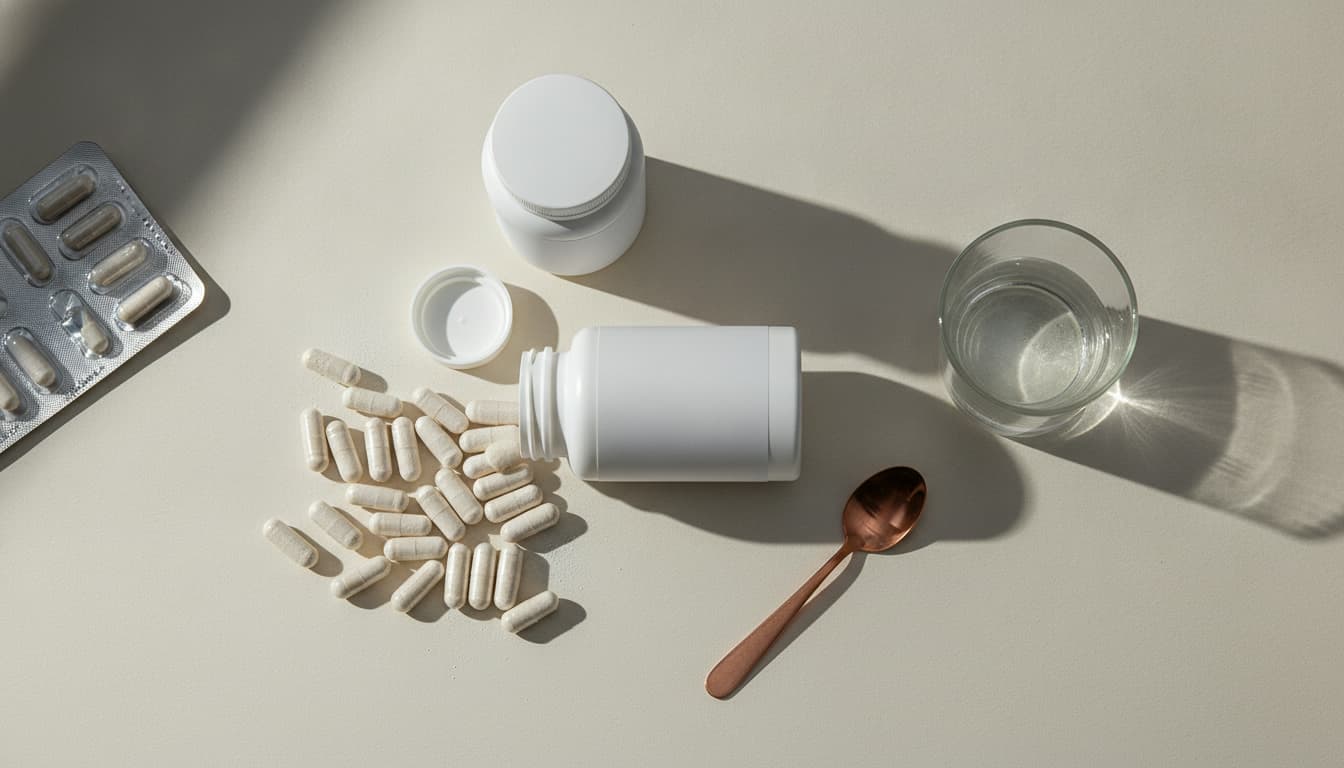
FDA reversed itself on 29 September 2025 and determined NMN is not excluded from the dietary supplement definition. Blood NAD rose at 300, 600 and 900 mg, while the largest positive outcome trial moved one tissue in 25 people.
- 01
FDA reversed its NMN position on 29 September 2025
Responding to a citizen petition from the Natural Products Association and the Alliance for Natural Health USA, FDA stated that it had reconsidered its position that dietary supplement or food marketing must be lawful in order to count for the purposes of the race-to-market clause, and that in light of this change in interpretation it had determined that NMN is not excluded from the dietary supplement definition (FDA response to docket FDA-2023-P-0872). Any page still reporting an FDA ban is describing a superseded position.
- 02
The 2022 exclusion letters were formally set aside in December 2025
FDA had told notifiers on 11 October 2022 and 4 November 2022 that NMN was excluded from the dietary supplement definition under 21 U.S.C. 321(ff)(3)(B)(ii). On 2 December 2025 the agency wrote that because NMN is not excluded, it was setting aside those two letters (FDA, NDIN 1259 response). The exclusion is therefore not merely disfavoured or unenforced; the underlying determinations have been withdrawn.
- 03
The trigger was MIB-626, and FDA says it missed the connection
The drug exclusion applied because MIB-626, an investigational new drug, has the same chemical structure as NMN and is therefore the same article, as confirmed by FDA's review of the relevant investigational new drug applications. FDA's own account states that it was not readily clear to the staff reviewing the notification that MIB-626 referred to NMN and that this information was overlooked in searches for clinical investigations of NMN (FDA response to docket FDA-2023-P-0872).
- 04
The notified condition of use is 400 mg per day, and products exceed it
The amended notification FDA acknowledged states that supplements containing the bulk NMN ingredient will be marketed to adults at levels not exceeding 400 mg per serving or 400 mg per day, for example one 400 mg serving daily or one 200 mg serving twice daily (FDA, NDIN 1259 response). Products sold at 500 or 1,000 mg per day sit outside the conditions of use in the notification that made the ingredient lawful, which is a distinction most labels do not draw.
- 05
Acknowledging a notification is procedural, not a safety finding
The same letter states that acceptance of the notification for filing is a procedural matter and does not constitute a finding by FDA that the new dietary ingredient, or a supplement containing it, is safe or is not adulterated, and that FDA is not precluded from taking action in future against any such supplement found to be unsafe, adulterated or misbranded (FDA, NDIN 1259 response). Marketing copy that reads the reversal as an endorsement is reading it wrong.
- 06
The primary endpoint of the best dose-ranging trial was a blood concentration
Eighty healthy middle-aged adults were randomised across placebo, 300, 600 and 900 mg once daily for 60 days in a multicentre, double-blind, parallel-group trial whose stated primary objective was to evaluate blood NAD concentration with dose-dependent regimens. Blood NAD rose significantly in all NMN groups at day 30 and day 60 against placebo and baseline, all P at or below 0.001, highest at 600 and 900 mg (Yi et al. 2023). A surrogate moved, which is what the trial was built to detect.
- 07
Everything a person would notice was secondary in that trial
Physical performance by six-minute walking test, blood biological age by an online calculator, HOMA-IR and a general health questionnaire were all secondary objectives alongside safety and tolerability (Yi et al. 2023). Quoting those results as evidence that NMN improves function means quoting secondary endpoints from a trial powered for a surrogate. The first author's listed affiliation is an NMN manufacturer, which is a reason for care rather than dismissal.
- 08
The strongest outcome trial moved one tissue in 25 people
Twenty-five postmenopausal women with prediabetes who were overweight or obese, 13 on 250 mg per day and 12 on placebo for 10 weeks, were assessed by hyperinsulinaemic-euglycaemic clamp, the reference method rather than a proxy. Muscle insulin sensitivity increased 25 plus or minus 7 percent, P less than 0.01, with increased skeletal muscle insulin signalling and muscle remodelling gene expression (Yoshino et al. 2021). It is a rigorous measurement in a very small sample.
- 09
The list of what did not change in that trial is longer than the list of what did
Body weight, body mass index, fat mass, intra-abdominal adipose tissue volume, intrahepatic triglyceride content, systolic and diastolic blood pressure, plasma glucose, insulin and free fatty acids, triglycerides, HDL cholesterol, adiponectin, leptin, hepatic insulin sensitivity, adipose tissue insulin sensitivity, mitochondrial respiratory capacity, handgrip strength and torque all failed to change (Yoshino et al. 2021). One tissue improved and nothing downstream of it followed, which constrains how far the result can be extrapolated.
- 10
The exercise trial title outruns the exercise trial result
Forty-eight amateur runners were randomised to placebo or 300, 600 or 1,200 mg per day for six weeks alongside five to six training sessions a week. Oxygen uptake, percentage of maximal oxygen uptake and power at the first and second ventilatory thresholds increased more at the medium and high doses than in controls. However, maximal oxygen uptake, oxygen pulse, oxygen uptake relative to work rate and peak power showed no difference from baseline in any group (Liao et al. 2021), with twelve participants per arm.
- 11
Nicotinamide riboside tells the same story with a longer run-up
In a two by six week randomised, double-blind, placebo-controlled crossover in healthy middle-aged and older adults, chronic nicotinamide riboside supplementation was well tolerated and effectively stimulated NAD metabolism, and the authors described the physiological findings as initial insight, suggesting that future clinical trials should further assess potential benefits for blood pressure and arterial stiffness (Martens et al. 2018). Seven years on, the NMN literature is writing the same sentence about the same class.
- 12
No human trial has reported a lifespan or major morbidity endpoint
The case for NAD precursors originates in rodent work on healthspan and lifespan, and nothing in the human literature yet tests those endpoints. The trials that exist run 6 to 10 weeks with samples of 25 to 80 and are powered for a blood concentration or a single tissue measurement. That gap between the animal rationale and the human evidence base is the entire honest summary of the category, and it is what the price premium is being charged against.
- 13
Compared against a supplement with outcome data, the ordering is clear
A category such as creatine monohydrate has decades of randomised outcome evidence on strength and lean mass at a few cents a day. NMN has a reliably rising NAD curve, one 25-person clamp study and a price that reaches roughly ninety dollars a month at the premium tier. That is not an argument that NMN does nothing; it is an argument about the order in which a limited supplement budget should be spent, and evidence grade rather than mechanism story should set that order.
- 14
If buying anyway, buy the cheap form and stay at the notified dose
No liposomal or sublingual formulation has published a clinical outcome that plain NMN powder did not, so the premium at roughly eleven times the bulk price per gram is buying an absorption claim with no endpoint attached. The defensible version is the cheapest form carrying a batch certificate of analysis, at or below the 400 mg per day condition of use that FDA actually acknowledged a notification for (FDA, NDIN 1259 response), with clear awareness that the purchased endpoint is a blood concentration.
What people ask us next.
- Is NMN legal as a dietary supplement in the United States?
- Yes, since 29 September 2025. FDA had determined in 2022 that NMN was excluded from the dietary supplement definition under the drug exclusion clause, but on that date it responded to a citizen petition by stating that it had reconsidered its position that prior marketing must have been lawful to count for the race-to-market clause, and had therefore determined that NMN is not excluded (FDA response to docket FDA-2023-P-0872). On 2 December 2025 FDA formally set aside its October and November 2022 letters (FDA, NDIN 1259 response).
- Does NMN actually work?
- It reliably raises the biomarker and has thin outcome data. In a dose-ranging trial in 80 healthy middle-aged adults, blood NAD concentration, the stated primary objective, rose significantly at 300, 600 and 900 mg per day at both day 30 and day 60, all P at or below 0.001 (Yi et al. 2023). The strongest outcome result is a 25 plus or minus 7 percent increase in muscle insulin sensitivity in 25 prediabetic postmenopausal women over 10 weeks, with body composition, liver fat, blood pressure, lipids and physical function all unchanged (Yoshino et al. 2021).
- How much NMN should be taken?
- The notified condition of use FDA acknowledged is levels not exceeding 400 mg per serving or 400 mg per day for adults (FDA, NDIN 1259 response), and that is the most defensible ceiling to work to. Trials have used 250 mg for 10 weeks (Yoshino et al. 2021), 300, 600 and 900 mg for 60 days (Yi et al. 2023) and 300, 600 and 1,200 mg for six weeks (Liao et al. 2021). Higher doses raised blood NAD further but did not deliver a correspondingly larger functional result in any of those trials.
- Is raising NAD the same as a health benefit?
- No, and treating it as such is the central error in this category. Blood NAD concentration is a surrogate: a measurement that sits on the causal pathway a hypothesis proposes, without itself being an outcome anyone experiences. The dose-ranging trial named it as the primary objective and put physical performance, HOMA-IR and general health in the secondary tier (Yi et al. 2023). Until a trial powered for a functional endpoint reports one, the honest description is that NMN moves a blood concentration.
- Does NMN improve athletic performance?
- The one trial in trained people is more equivocal than its title. Forty-eight amateur runners took placebo or 300, 600 or 1,200 mg per day for six weeks alongside their training. Oxygen uptake, percentage of maximal oxygen uptake and power at both ventilatory thresholds rose more in the medium and high dose groups than in controls, but maximal oxygen uptake, oxygen pulse, oxygen uptake relative to work rate and peak power showed no difference from baseline in any group (Liao et al. 2021). Twelve participants per arm limits what can be concluded either way.
- Is NMN better than nicotinamide riboside?
- No head-to-head trial supports a preference, and both compounds have the same evidentiary shape. Chronic nicotinamide riboside supplementation in a two by six week randomised crossover in healthy middle-aged and older adults was well tolerated and effectively stimulated NAD metabolism, with the authors describing the physiological findings as initial insight and calling for future trials on blood pressure and arterial stiffness (Martens et al. 2018). Both raise the biomarker; neither has a demonstrated human outcome.
- Does the FDA reversal mean NMN is safe?
- No, and FDA says so directly. The December 2025 letter states that acceptance of a new dietary ingredient notification for filing is a procedural matter and does not constitute a finding by FDA that the ingredient or a supplement containing it is safe or is not adulterated, and that FDA is not precluded from taking future action against any such supplement found unsafe, adulterated or misbranded (FDA, NDIN 1259 response). The reversal is about the drug exclusion clause and the race-to-market interpretation, not about a safety assessment.
- Are liposomal or sublingual NMN products worth the premium?
- No published trial supports the extra cost. The human trials that produced the NAD and insulin sensitivity results used ordinary oral NMN at 250 to 900 mg per day (Yoshino et al. 2021; Yi et al. 2023), and no enhanced-delivery product has reported a clinical outcome that plain oral NMN did not. At roughly eleven times the bulk price per gram, the premium buys an absorption claim on a molecule whose blood concentration already rises reliably at ordinary oral doses, which is buying a bigger surrogate.
Every claim, cited.
- [01]US Food and Drug Administration, response to citizen petition from the Natural Products Association and the Alliance for Natural Health USA regarding beta-nicotinamide mononucleotide, docket FDA-2023-P-0872, signed 29 September 2025 by Donald Prater, Principal Deputy Director for Human Foods. FDA states that it has reconsidered its position that the dietary supplement or food marketing must be lawful to count for purposes of the race-to-market clause and that, in light of this change in interpretation, it has determined that NMN is not excluded from the dietary supplement definition. The response records that NMN and MIB-626 have the same chemical structure, as confirmed by FDA's review of the relevant investigational new drug applications, and are thus the same article, and that it was not readily clear to the staff reviewing the notification that MIB-626 referred to NMN, information that was overlooked in searches for clinical investigations of NMN. The petition is granted in part and denied in part, with the enforcement discretion and rulemaking requests denied as moot.
- [02]US Food and Drug Administration, Center for Food Safety and Applied Nutrition, response letter regarding new dietary ingredient notification NDIN 1259 for beta-nicotinamide mononucleotide, addressed to Inner Mongolia Kingdomway Pharmaceutical Limited, 2 December 2025. The letter recounts that on 11 October 2022 FDA responded to NDIN 1259 stating that NMN is excluded from the dietary supplement definition under 21 U.S.C. 321(ff)(3)(B)(ii), that a supplemental letter followed on 4 November 2022, and that following the 29 September 2025 petition response FDA has determined NMN is not excluded and is therefore setting aside both 2022 letters. It records the amended notification's conditions of use as marketing to adults in forms appropriate to dietary supplements at levels not exceeding 400 mg NMN per serving or 400 mg NMN per day. It states that acceptance of the notification for filing is a procedural matter and does not constitute a finding by FDA that the new dietary ingredient or a supplement containing it is safe or is not adulterated, and that FDA is not precluded from taking future action.
- [03]Yoshino M, Yoshino J, Kayser BD, Patti GJ, Franczyk MP, Mills KF, Sindelar M, Pietka T, Patterson BW, Imai SI, Klein S. 2021. Nicotinamide mononucleotide increases muscle insulin sensitivity in prediabetic women. Science 372(6547):1224-1229. A 10-week randomised, placebo-controlled, double-blind trial in postmenopausal women with prediabetes who were overweight or obese, 13 receiving 250 mg per day of NMN and 12 receiving placebo. Insulin-stimulated glucose disposal assessed by hyperinsulinaemic-euglycaemic clamp increased by 25 plus or minus 7 percent, P less than 0.01, with increased skeletal muscle insulin signalling and up-regulated expression of platelet-derived growth factor receptor beta and other muscle remodelling genes. Body weight, body mass index, fat mass, intra-abdominal adipose tissue volume, intrahepatic triglyceride content, blood pressure, plasma glucose, insulin and free fatty acids, lipid profile, adiponectin, leptin, hepatic and adipose tissue insulin sensitivity, mitochondrial respiratory capacity and physical function measures did not change. The paper drew published comments in Science, Cell Metabolism and Cardiovascular Research.
- [04]Yi L, Maier AB, Tao R, Lin Z, Vaidya A, Pendse S, Thasma S, Andhalkar N, Avhad G, Kumbhar V. 2023. The efficacy and safety of beta-nicotinamide mononucleotide (NMN) supplementation in healthy middle-aged adults: a randomized, multicenter, double-blind, placebo-controlled, parallel-group, dose-dependent clinical trial. GeroScience 45(1):29-43. Eighty middle-aged healthy adults were randomised to 60 days of once daily oral placebo, 300 mg, 600 mg or 900 mg NMN. The primary objective was to evaluate blood NAD concentration with dose-dependent regimens; secondary objectives were safety and tolerability alongside physical performance by six-minute walking test, blood biological age by the Aging.Ai 3.0 calculator, HOMA-IR and a subjective general health assessment by the 36-Item Short Form Survey. All 80 participants completed the trial without protocol violation. Blood NAD concentrations increased statistically significantly in all NMN-treated groups at day 30 and day 60 compared with both placebo and baseline, all P at or below 0.001, and were highest in the 600 mg and 900 mg groups. The first author's listed affiliation is an NMN manufacturer.
- [05]Liao B, Zhao Y, Wang D, Zhang X, Hao X, Hu M. 2021. Nicotinamide mononucleotide supplementation enhances aerobic capacity in amateur runners: a randomized, double-blind study. J Int Soc Sports Nutr 18(1):54. A six-week randomised, double-blind, placebo-controlled four-arm trial in 48 young and middle-aged recreationally trained runners, randomised to 300 mg, 600 mg or 1,200 mg per day of NMN or placebo, twelve per group with ten male and two female participants each, training 5 to 6 times weekly in sessions of 40 to 60 minutes. Analysis of covariance of change from baseline showed that oxygen uptake, percentage of maximum oxygen uptake, power at the first ventilatory threshold and power at the second ventilatory threshold increased to a higher degree in the medium and high dosage groups than in the control group. There was no difference in maximum oxygen uptake, oxygen pulse, oxygen uptake related to work rate, or peak power after six weeks from baseline in any of the groups.
- [06]Martens CR, Denman BA, Mazzo MR, Armstrong ML, Reisdorph N, McQueen MB, Chonchol M, Seals DR. 2018. Chronic nicotinamide riboside supplementation is well-tolerated and elevates NAD+ in healthy middle-aged and older adults. Nat Commun 9(1):1286. A two by six week randomised, double-blind, placebo-controlled crossover clinical trial providing evidence that chronic supplementation with the NAD precursor vitamin nicotinamide riboside is well tolerated and effectively stimulates NAD metabolism in healthy middle-aged and older adults. The authors describe their physiological findings as initial insight into the effects of chronic nicotinamide riboside supplementation on physiological function in humans and suggest that future clinical trials should further assess the potential benefits of nicotinamide riboside for reducing blood pressure and arterial stiffness in this group. Cited here as the parallel case showing that the NAD precursor category as a whole has biomarker evidence without demonstrated human outcomes.
The Larderlab Team builds evidence-led frameworks for eating, lifting, and stocking a kitchen. We cite every claim. We publish the spreadsheet when possible. We buy what we review at retail price. When new data lands, we revise with a dated note.
Next in this hub.
Third-Party Tested Supplements: What Certification Actually Verifies
Supplements are not FDA-approved for safety and effectiveness before sale. Of 57 botanical sports products analysed, 40 percent held no detectable amount of the labeled ingredient and 12 percent a prohibited compound.
13 min · rev 2026-09-04L-Theanine Benefits: The Caffeine Pairing Has the Evidence, the Solo Dose Mostly Does Not
A 200 ml cup of black tea holds 24.2 mg of L-theanine, so a 200 mg capsule is roughly eight cups. Pooled trials show attention switching accuracy improved with caffeine at a standardised mean difference of 0.33, while EFSA found no cause and effect for theanine alone.
14 min · rev 2026-09-07Psyllium Husk Benefits: One of the Few Supplements With an Authorised Health Claim
The authorised coronary heart disease claim requires 7 g per day of soluble fiber from psyllium seed husk. Pooled across 28 trials at a median 10.2 g dose, LDL cholesterol fell 0.39 mmol/L and apolipoprotein B fell 0.05 g/L.
14 min · rev 2026-09-07Get the Larderlab Macro Planner.
A Google Sheet that calculates your protein target, splits it across 3-5 meals, and ranks 20 protein sources by $/gram. Free. Copy-and-modify your own version.
By subscribing, you agree to our Privacy Policy. Unsubscribe anytime.