How much zinc you actually need per day
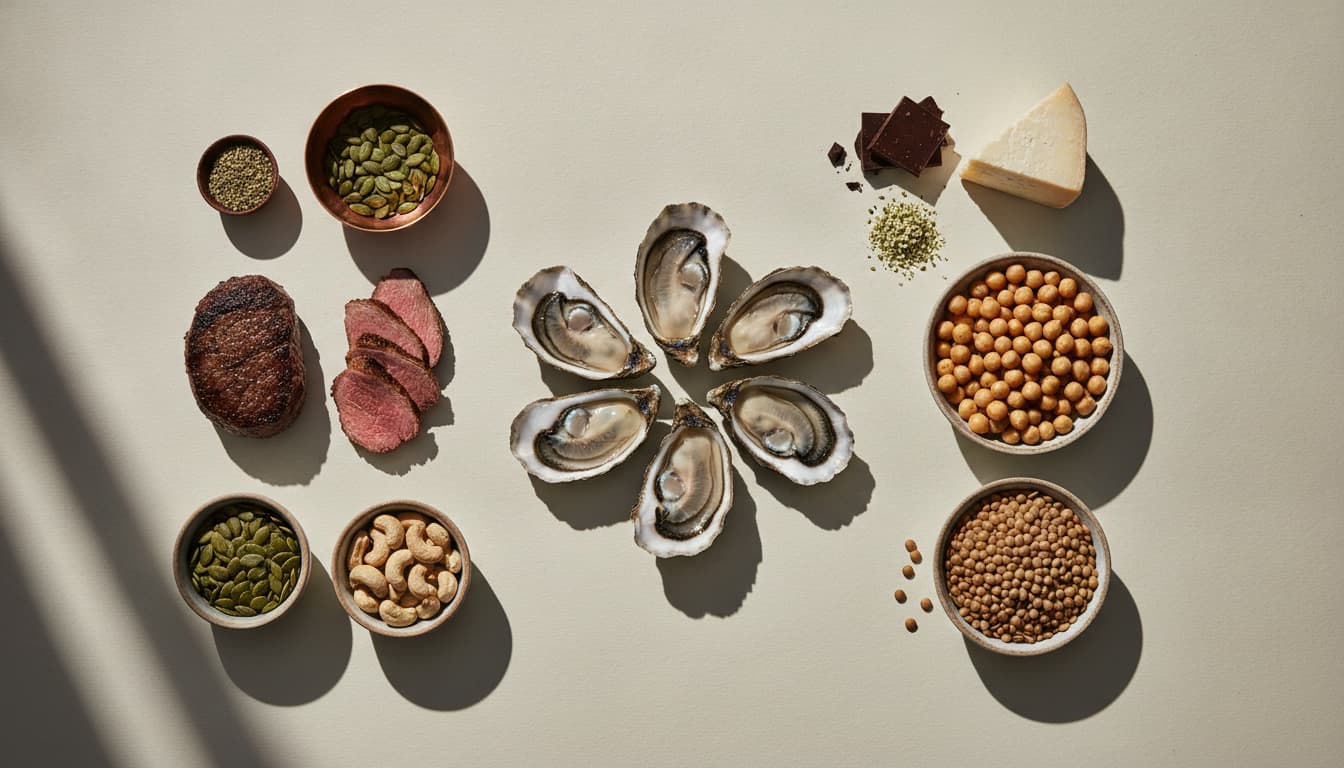
The RDA is 11 mg a day for men and 8 mg for women, and the tolerable upper limit is 40 mg. The numbers, why too much zinc causes copper deficiency, why vegetarians need more, and what the cold-lozenge evidence really shows.
- 01
The target: 11 mg men, 8 mg women
The RDA for zinc is 11 mg a day for adult men and 8 mg for women, rising to 11 mg in pregnancy and 12 mg while breastfeeding (NIH ODS). Because the body has no dedicated zinc store, a regular dietary supply is needed, but the target is modest and easily met from a mixed diet. These are the numbers that matter for health, well below the doses found in many single-nutrient zinc supplements, which is the first hint that supplement sizes often overshoot what the body needs.
- 02
Oysters and meat lead; food makes it easy
Oysters are in a class of their own for zinc, with a few carrying many times the daily requirement, followed by red meat, poultry, and other shellfish, then legumes, seeds, nuts, whole grains, and dairy (NIH ODS; USDA). Because zinc from animal foods is well absorbed, meat-eaters reach the target easily. For most people a normal diet covers zinc without any thought, which is why deficiency in the general population is uncommon outside specific risk groups.
- 03
The 40 mg upper limit and the copper problem
Zinc is a nutrient where the upper limit really matters: the tolerable upper intake level is 40 mg a day, and chronically exceeding it, almost always from supplements, interferes with copper absorption because the two compete (NIH ODS). This can cause a secondary copper deficiency, leading to anemia and neurological problems. The risk comes from high-dose zinc supplements and overused zinc lozenges, so with zinc, more is genuinely not better, and staying under 40 mg from all sources is the sensible rule.
- 04
Vegetarians need about 50 percent more
Plant-based eaters need roughly 50 percent more zinc than the RDA, because the phytates in whole grains, legumes, nuts, and seeds bind zinc and reduce absorption (NIH ODS). The same foods that supply zinc also limit its uptake. Preparation techniques help: soaking, sprouting, and fermenting, as in leavened bread, break down phytates and improve absorption. So vegetarians should both aim higher and use these methods, rather than assuming a plant-based diet automatically provides enough zinc.
- 05
Zinc lozenges for colds: a short-term use
Zinc lozenges have modest evidence for shortening the duration of the common cold, but only if started within about a day of symptoms appearing (NIH ODS). This is a short-term therapeutic use, not a reason for ongoing high doses, because the amounts in cold lozenges can exceed the 40 mg upper limit and, used long-term, would risk copper deficiency. Nasal zinc products should be avoided because some have been linked to lasting loss of smell. Lozenges are a brief intervention, not a daily habit.
- 06
Who is at risk of falling short
Zinc deficiency is uncommon in the general population but more likely in specific groups: older adults, vegetarians and vegans, people with digestive diseases like Crohn's that impair absorption, heavy drinkers, and pregnant or breastfeeding women (NIH ODS). Signs include impaired immunity, slow wound healing, hair loss, and loss of taste, which we cover in our zinc-deficiency guide. For these groups, attention to zinc-rich foods or a modest supplement is worthwhile; for everyone else, food covers the target.
What people ask us next.
- How much zinc do I need a day?
- The RDA is 11 mg a day for adult men and 8 mg for women, rising to 11 mg in pregnancy and 12 mg while breastfeeding (NIH ODS). The tolerable upper limit is 40 mg a day. These are modest amounts easily met by a mixed diet, since oysters, meat, shellfish, legumes, seeds, and whole grains all supply zinc. Because the body has no dedicated store, a regular supply matters, but most people reach the target from food without difficulty.
- Can you take too much zinc?
- Yes, and this matters more than with most minerals. The tolerable upper limit is 40 mg a day, and chronically exceeding it, almost always from supplements, interferes with copper absorption because zinc and copper compete, which can cause a secondary copper deficiency with anemia and neurological problems (NIH ODS). High-dose zinc supplements and overused lozenges are the main culprits. With zinc, more is genuinely not better, so staying under 40 mg from all sources combined is the sensible rule.
- Do vegetarians need more zinc?
- Yes, roughly 50 percent more than the RDA. The phytates in whole grains, legumes, nuts, and seeds bind zinc and reduce how much the body absorbs, so the same plant foods that provide zinc also limit its uptake (NIH ODS). Soaking, sprouting, and fermenting these foods, as in leavened bread, break down phytates and improve absorption. Vegetarians and vegans should aim higher than the standard target and use these preparation methods rather than assuming a plant-based diet automatically supplies enough.
- Do zinc lozenges help with colds?
- There is modest evidence that zinc lozenges can shorten the duration of a cold, but only if started within about a day of symptoms beginning (NIH ODS). This is a short-term therapeutic use at doses that often exceed the 40 mg upper limit, so it should not be continued long-term because of the risk to copper status. Zinc nasal sprays and gels should be avoided, as some have been linked to lasting loss of smell. Lozenges are a brief intervention, not a daily supplement.
- Should I take a zinc supplement?
- Only to correct a genuine shortfall. The modest target is easily met from food for most people, and because excess zinc interferes with copper absorption, routine high-dose supplements can do harm (NIH ODS). Supplements make sense for people at higher risk of deficiency, older adults, vegetarians, those with digestive diseases, or during a short course of lozenges for a cold, ideally with attention to the 40 mg upper limit. For the general population, food is the better and safer source.
Every claim, cited.
The Larderlab Team builds evidence-led frameworks for eating, lifting, and stocking a kitchen. We cite every claim. We publish the spreadsheet when possible. We buy what we review at retail price. When new data lands, we revise with a dated note.
Next in this hub.
Resistant Starch Foods: The Sources, and Why Cooling Matters
Resistant starch escapes digestion and feeds your gut bacteria, and cooking then cooling potatoes, rice, and pasta creates more of it. The ranking, the four types, and what the evidence shows for blood sugar and gut health.
8 min · rev 2026-08-10Berberine Side Effects: Why the Gut Takes the Dose and the Liver Takes the Interaction
Absolute oral bioavailability measured 0.36 percent in rats, so the gut receives almost the whole dose and 34.5 percent of patients reported transient gastrointestinal events. Two weeks at 300 mg three times a day raised the CYP2D6 probe ratio ninefold.
14 min · rev 2026-09-05How Much Choline Per Day: 550 mg, 425 mg, and Why It Is an AI Not an RDA
The Adequate Intake is 550 mg a day for men and 425 mg for women, and only 10.8 percent of Americans reach it. What an AI actually means, the egg at 147 mg, and the arithmetic of getting there from food.
12 min · rev 2026-09-04Get the Larderlab Macro Planner.
A Google Sheet that calculates your protein target, splits it across 3-5 meals, and ranks 20 protein sources by $/gram. Free. Copy-and-modify your own version.
By subscribing, you agree to our Privacy Policy. Unsubscribe anytime.