Berberine side effects, and why the drug interaction outranks the stomach ache
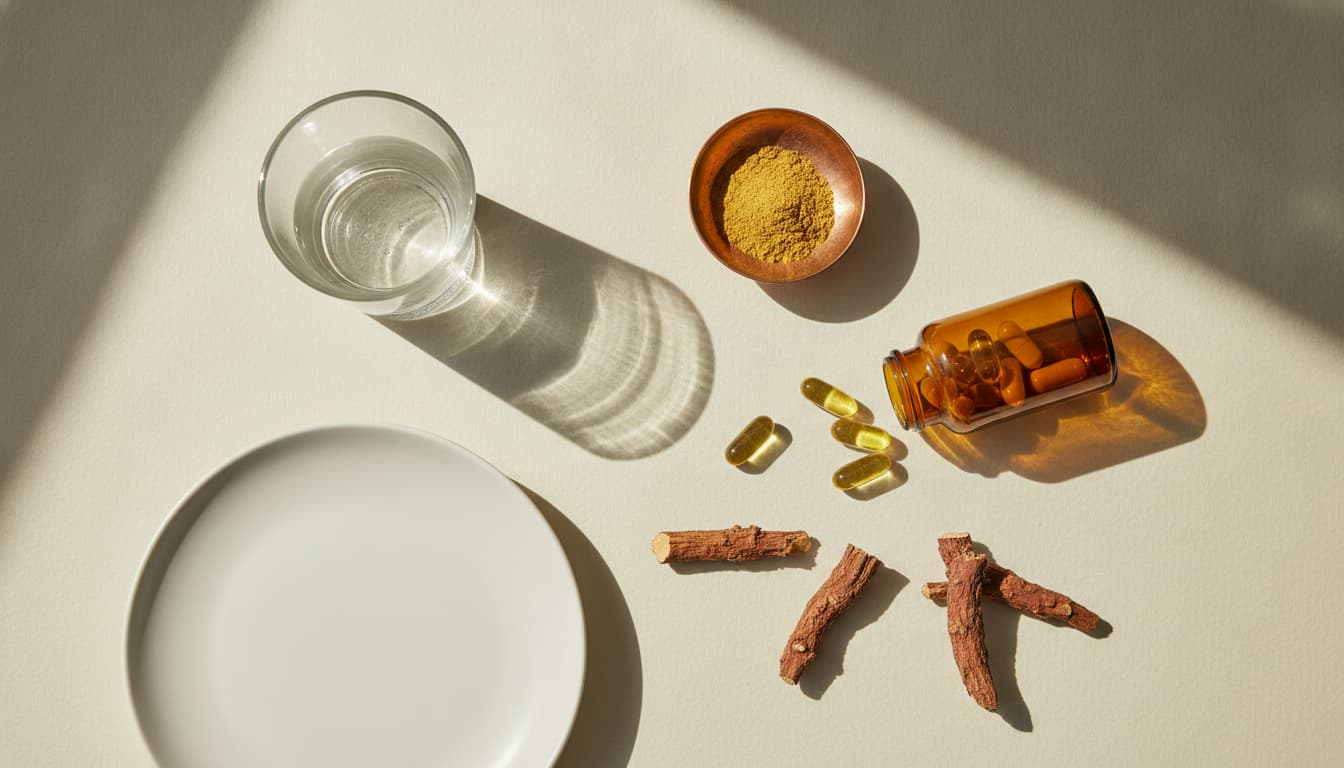
Absolute oral bioavailability measured 0.36 percent in rats, so the gut receives almost the whole dose and 34.5 percent of patients reported transient gastrointestinal events. Two weeks at 300 mg three times a day raised the CYP2D6 probe ratio ninefold.
- 01
Absolute oral bioavailability was 0.36 percent, and that single number explains the side effects
Using four dosing routes to separate gastric, intestinal and hepatic first-pass elimination, roughly half an intragastric dose ran intact through the gastrointestinal tract and the other half was disposed of by the small intestine, giving an absolute oral bioavailability of 0.36 percent in rats, with a 70-fold higher area under the curve in liver than in plasma (Liu et al. 2010). A compound that does not reach the circulation delivers its dose to the gut, which is exactly where the reported adverse events occur.
- 02
Roughly a third of patients report gastrointestinal events in the trials
In the randomised pilot that established berberine in the English-language literature, 20 patients, 34.5 percent of the group, experienced transient gastrointestinal adverse effects, and no hepatic or renal damage was documented (Yin et al. 2008). That is a high enough rate to be the expected experience rather than an unlucky one, and it is the number to have in mind before starting. The word transient matters: the pattern is concentrated in the first weeks and at each dose increase.
- 03
The symptom list runs in both directions because the mechanism is luminal
The reference monograph lists the side effects as few and largely mild and transient gastrointestinal symptoms of nausea, abdominal bloating, diarrhea or constipation (NIH LiverTox). Constipation and diarrhoea appearing on the same list is not sloppiness. Berberine acts on gut motility and on the microbial community in a lumen that receives nearly the whole dose, and the net direction differs between individuals. Predicting which way a given person goes is not currently possible from any published marker.
- 04
Dose splitting and food are the mitigation, and they are dose-derived not folkloric
The usual recommended dose is 250 to 500 mg two or three times daily (NIH LiverTox), which means a real daily total of 750 to 1,500 mg. Splitting is not a convenience convention; it lowers the peak luminal concentration that produces the symptoms, which is why a single 1,500 mg dose is both worse tolerated and no better supported. Starting at one 500 mg dose a day with food and adding a second after a week is the standard titration used to keep the first-fortnight symptom cluster manageable.
- 05
The liver is the organ people fear and the evidence does not support the fear
Berberine has not been linked to serum enzyme elevations during therapy, and despite wide scale use as a supplement it has not been linked to published instances of clinically apparent liver injury, giving it a likelihood score of E, an unlikely cause of clinically apparent liver injury (NIH LiverTox). That grade comes from the reference source whose entire function is cataloguing hepatotoxic agents, so it carries more weight than generic caution about botanical extracts and should be allowed to settle the question.
- 06
Two weeks at 300 mg three times a day inhibited CYP2D6 ninefold in healthy men
In a two-phase randomised crossover study, after two weeks of berberine at 300 mg three times daily the 0 to 8 hour urinary dextromethorphan to dextrorphan ratio increased ninefold, indicating decreased CYP2D6 activity, and the losartan to E-3174 ratio doubled, indicating decreased CYP2C9 activity (Guo et al. 2012). The dose used was 900 mg a day, below what many labels suggest, so this is not a high-dose artefact. CYP2D6 handles many antidepressants and beta blockers; CYP2C9 handles warfarin.
- 07
CYP3A4 inhibition showed up on every midazolam parameter
In the same study, midazolam maximum concentration rose 38 percent, area under the curve to infinity rose 40 percent, area under the curve to 12 hours rose 37 percent, oral clearance fell 27 percent, and half-life extended from 0.66 to 0.99 hours (Guo et al. 2012). CYP3A4 is the dominant metabolising enzyme for a very large share of prescriptions including statins, calcium channel blockers and immunosuppressants, so this is the interaction with the widest reach and the one most likely to matter to a reader already on medication.
- 08
The interaction has been demonstrated clinically on a narrow therapeutic index drug
In 52 renal transplant recipients given cyclosporin A plus 0.2 g of berberine three times daily for three months against 52 controls, final blood concentrations and concentration to dose ratios were 29.3 percent and 27.8 percent higher in the berberine group, and in a six-patient pharmacokinetic substudy area under the curve rose 34.5 percent, minimum concentration rose 88.3 percent and apparent clearance fell 40.4 percent (Wu et al. 2005). The authors attributed it to CYP3A4 inhibition in liver and small intestine.
- 09
Pregnancy, breastfeeding and infancy are contraindications with a named mechanism
Assessed by the peroxidase kinetic method, berberine displaced bilirubin from albumin about tenfold more effectively than phenylbutazone on a molar basis and about a hundredfold more than papaverine, and chronic administration to adult rats significantly decreased mean bilirubin serum protein binding; the work was prompted by reports of kernicterus risk among jaundiced newborn infants exposed to the parent herb (Chan 1993). Unbound bilirubin is the fraction that crosses into the brain, which makes this a specific rather than a precautionary exclusion.
- 10
The glycaemic effect is real, consistent and modest
An umbrella meta-analysis of randomised controlled trials reported weighted mean differences of 0.57 percentage points lower haemoglobin A1c, 95 percent confidence interval 0.68 to 0.46 lower, and 0.77 mmol/L lower fasting blood glucose, 95 percent confidence interval 0.90 to 0.63 lower, alongside reductions in HOMA-IR, interleukin 6, tumour necrosis factor alpha and C-reactive protein (Nazari et al. 2024). A 0.57 point A1c movement is clinically meaningful and is also roughly a third of what the older single trials advertised.
- 11
The evidence base is consistent in direction and weak in quality
The 27 randomised controlled trials in 2,569 patients found berberine plus lifestyle intervention better than lifestyle intervention alone, berberine plus oral hypoglycaemics better than those drugs alone, and no statistical significance between berberine and oral hypoglycaemics head to head, with no serious adverse reaction reported across all 27 experiments (Lan et al. 2015). The same paper states that due to the overall limited quality of the included studies the therapeutic benefit can be substantiated only to a limited degree, and calls for standardised preparations.
- 12
The GLP-1 comparison fails on both mechanism and magnitude
Berberine has no incretin receptor activity and is not a GLP-1 receptor agonist. On magnitude, mean body weight change at week 68 was 14.9 percent below baseline on semaglutide against 2.4 percent on placebo, with 50.5 percent of the treatment group losing 15 percent or more of body weight (Wilding et al. 2021). No berberine trial reports anything in that range, and the berberine meta-analyses report glycaemic and inflammatory endpoints because weight was not the endpoint the trials were built to move.
- 13
Premium formulations sell a bioavailability claim without an outcome claim
Given a measured 0.36 percent absolute oral bioavailability (Liu et al. 2010), a formulation that raises plasma concentration is selling something real. What is missing is the second step: no dihydroberberine or phytosome product has published a clinical outcome that the plain hydrochloride did not produce, and the plasma to effect relationship for berberine is poor precisely because much of the action appears to be luminal. Paying roughly ten times per gram for a higher plasma curve is paying for a surrogate.
- 14
There is no compendial standard, so the certificate of analysis is the product
Berberine reaches the shelf as a botanical extract from Coptis or Phellodendron species rather than as a pharmacopoeial article, so alkaloid content per capsule, the ratio of berberine to related alkaloids, and solvent or heavy metal residues are all determined by the manufacturer. That places it in the same category as every other third-party tested supplement question: without a batch-level certificate of analysis, the label figure is an assertion. Given the size of the CYP interaction, dose accuracy is not a cosmetic concern here.
What people ask us next.
- What are the most common berberine side effects?
- Gastrointestinal, and they are common rather than rare. In the randomised pilot most often cited for efficacy, 34.5 percent of patients experienced transient gastrointestinal adverse effects with no hepatic or renal damage documented (Yin et al. 2008). The reference monograph describes the profile as few and largely mild and transient gastrointestinal symptoms of nausea, abdominal bloating, diarrhea or constipation (NIH LiverTox). The reason they concentrate in the gut is pharmacokinetic: absolute oral bioavailability was 0.36 percent in rats, so almost the entire dose stays in the lumen and the enterocytes (Liu et al. 2010).
- How much berberine should be taken per day?
- The dose pattern in the clinical literature is 250 to 500 mg two or three times daily, so a real daily total of 750 to 1,500 mg (NIH LiverTox). It is split rather than taken once because the compound is poorly absorbed and the peak luminal concentration is what produces symptoms. Notably, the human study that found cytochrome P450 inhibition used only 300 mg three times daily, or 900 mg a day (Guo et al. 2012), which is at the low end of what is commonly sold, so a lower dose does not avoid the interaction question.
- Does berberine damage the liver?
- The evidence says no. Berberine has not been linked to serum enzyme elevations during therapy, and despite wide scale use as a supplement it has not been linked to published instances of clinically apparent liver injury, giving it a likelihood score of E, meaning an unlikely cause of clinically apparent liver injury (NIH LiverTox). That grade comes from the reference database dedicated to cataloguing drug-induced liver injury. The organ-level concern that is supported by data is not hepatotoxicity but hepatic drug metabolism, since berberine inhibits CYP3A4, CYP2C9 and CYP2D6 (Guo et al. 2012).
- Which medications interact with berberine?
- Anything metabolised by CYP3A4, CYP2C9 or CYP2D6, which covers a large share of prescriptions. Two weeks at 300 mg three times daily raised the CYP2D6 probe ratio ninefold, doubled the CYP2C9 probe ratio, and raised midazolam area under the curve 40 percent while cutting its oral clearance 27 percent (Guo et al. 2012). The clinical demonstration is in transplant medicine: cyclosporin A trough concentrations ended 29.3 percent higher than controls, with area under the curve up 34.5 percent (Wu et al. 2005). Anyone on a prescription drug should clear berberine with a pharmacist first.
- Is berberine safe during pregnancy or breastfeeding?
- No, and the reason is specific rather than precautionary. Berberine displaced bilirubin from albumin about tenfold more potently than phenylbutazone on a molar basis and about a hundredfold more than papaverine, and chronic dosing in rats significantly reduced mean bilirubin serum protein binding; the study was prompted by reports of kernicterus risk in jaundiced newborn infants exposed to the parent herb (Chan 1993). Unbound bilirubin is the fraction that crosses into the neonatal brain. That places berberine outside the acceptable set in pregnancy, during breastfeeding and in infants.
- Is berberine really nature's alternative to a GLP-1 drug?
- No, on both mechanism and magnitude. Berberine has no incretin receptor activity. On magnitude, the reference weight-loss trial reported a mean body weight change of 14.9 percent below baseline at week 68 on semaglutide against 2.4 percent on placebo, with 50.5 percent of the treatment group losing 15 percent or more (Wilding et al. 2021). The berberine literature reports glycaemic endpoints, with a pooled haemoglobin A1c reduction of 0.57 percentage points (Nazari et al. 2024). Those are different classes of result, and the marketing comparison does not survive the numbers.
- How long do berberine side effects last?
- The trial descriptions consistently use the word transient, and the practical pattern is that symptoms cluster in the first one to two weeks and again at each dose increase (Yin et al. 2008; NIH LiverTox). That timing is what a luminal irritant looks like rather than a systemic toxicity, which is why the standard approach is to start at one 500 mg dose with food, add a second dose after about a week, and hold at a total the gut tolerates. Symptoms that persist beyond a few weeks, or any symptom outside the gastrointestinal list, are a reason to stop and ask a clinician.
- Is a dihydroberberine or phytosome product worth the extra cost?
- It is selling a real problem and an unproven solution. Absolute oral bioavailability of ordinary berberine was 0.36 percent in rats with a 70-fold liver to plasma area under the curve ratio (Liu et al. 2010), so there is genuine headroom. What does not exist is a trial showing that a higher plasma curve produces a better clinical outcome, and the poor plasma concentration to effect relationship suggests part of the action is luminal, which an absorption-enhanced product would reduce rather than improve. At roughly ten times the price per gram, that is a surrogate endpoint purchase.
Every claim, cited.
- [01]NIH LiverTox, Clinical and Research Information on Drug-Induced Liver Injury, Berberine chapter, last updated 6 October 2020. States that the usual recommended dose of the herbal product is 250 to 500 mg two or three times daily. Side effects are described as few and largely mild and transient gastrointestinal symptoms of nausea, abdominal bloating, diarrhea or constipation, and in clinical trials adverse events were no more frequent with berberine than with placebo, with serious adverse events rare. On hepatotoxicity the chapter states that berberine has not been linked to serum enzyme elevations during therapy and that despite wide scale use as an herbal supplement it has not been linked to published instances of clinically apparent liver injury, assigning a likelihood score of E, an unlikely cause of clinically apparent liver injury.
- [02]Liu YT, Hao HP, Xie HG, Lai L, Wang Q, Liu CX, Wang GJ. 2010. Extensive intestinal first-pass elimination and predominant hepatic distribution of berberine explain its low plasma levels in rats. Drug Metab Dispos 38(10):1779-84. Four dosing routes, intragastric, intraduodenal, intraportal and intravenous, were used to separate gastric, intestinal and hepatic first-pass elimination. After intragastric dosing approximately half of the berberine ran intact through the gastrointestinal tract and another half was disposed of by the small intestine, leading to an absolute oral bioavailability of 0.36 percent in rats. There was a 70-fold increase in the ratio of the area under the concentration-time curve for berberine in liver versus plasma. The authors conclude that intestinal first-pass elimination is the major barrier to oral bioavailability.
- [03]Yin J, Xing H, Ye J. 2008. Efficacy of berberine in patients with type 2 diabetes mellitus. Metabolism 57(5):712-7. A randomised controlled pilot study in two parts. In newly diagnosed patients, haemoglobin A1c fell from 9.5 percent to 7.5 percent, fasting blood glucose from 10.6 to 6.9 mmol/L and postprandial blood glucose from 19.8 to 11.1 mmol/L, with the hypoglycaemic effect described as similar to metformin. In poorly controlled patients, haemoglobin A1c fell from 8.1 percent to 7.3 percent, fasting plasma insulin fell 28.1 percent and the insulin resistance index fell 44.7 percent. On safety, 20 patients, 34.5 percent, experienced transient gastrointestinal adverse effects, and no hepatic or renal damage was documented.
- [04]Guo Y, Chen Y, Tan ZR, Klaassen CD, Zhou HH. 2012. Repeated administration of berberine inhibits cytochromes P450 in humans. Eur J Clin Pharmacol 68(2):213-7. A two-phase randomised crossover study in healthy male subjects. After two weeks of berberine at 300 mg three times daily by mouth, midazolam, omeprazole, dextromethorphan, losartan and caffeine were used as probes for CYP3A4, 2C19, 2D6, 2C9 and 1A2. The 0 to 8 hour urinary dextromethorphan to dextrorphan ratio increased ninefold, P less than 0.01, indicating decreased CYP2D6 activity. The losartan to E-3174 ratio doubled, P less than 0.01, indicating decreased CYP2C9 activity. For midazolam, maximum concentration rose 38 percent, area under the curve to infinity rose 40 percent, area under the curve to 12 hours rose 37 percent, oral clearance fell 27 percent, and half-life rose from 0.66 to 0.99 hours. The authors conclude that drug-drug interactions should be considered when berberine is administered.
- [05]Wu X, Li Q, Xin H, Yu A, Zhong M. 2005. Effects of berberine on the blood concentration of cyclosporin A in renal transplanted recipients: clinical and pharmacokinetic study. Eur J Clin Pharmacol 61(8):567-72. In a randomised controlled trial, 52 renal transplant recipients received cyclosporin A plus 0.2 g of berberine three times daily for three months while 52 received cyclosporin A alone. Final blood concentrations and concentration to dose ratios in the berberine group were 29.3 percent and 27.8 percent higher than in the berberine-free group. In a six-patient pharmacokinetic substudy, mean area under the curve rose 34.5 percent, time to peak rose 1.7 hours, half-life rose 2.7 hours, steady-state concentration rose 34.5 percent, minimum concentration rose 88.3 percent and apparent clearance fell 40.4 percent. The mechanism is attributed to CYP3A4 inhibition in the liver and small intestine.
- [06]Chan E. 1993. Displacement of bilirubin from albumin by berberine. Biol Neonate 63(4):201-8. The study examined the effect of berberine, the major ingredient of the Chinese herb huanglian, Coptis chinensis, reported to pose some risk for kernicterus among jaundiced newborn infants, on the protein binding of bilirubin using the peroxidase kinetic method. Berberine was found in vitro to be about tenfold superior on a molar basis to phenylbutazone, a known potent displacer of bilirubin, and about a hundredfold superior to papaverine, a berberine-type alkaloid. Chronic intraperitoneal administration of berberine at 10 and 20 micrograms per g daily for one week to adult rats resulted in a significant decrease in mean bilirubin serum protein binding due to in vivo displacement.
- [07]Nazari A, Ghotbabadi ZR, Kazemi KS, Metghalchi Y, Tavakoli R, Rahimabadi RZ, Ghaheri M. 2024. The effect of berberine supplementation on glycemic control and inflammatory biomarkers in metabolic disorders: an umbrella meta-analysis of randomized controlled trials. Clin Ther 46(2):e64-e72. Pooling existing meta-analyses to April 2023, berberine supplementation reduced fasting blood glucose with a weighted mean difference of 0.77 lower, 95 percent confidence interval 0.90 to 0.63 lower, haemoglobin A1c with a weighted mean difference of 0.57 lower, 95 percent confidence interval 0.68 to 0.46 lower, HOMA-IR with a weighted mean difference of 1.04 lower, and insulin with a weighted mean difference of 1.00 lower, together with reductions in interleukin 6, tumour necrosis factor alpha and C-reactive protein.
- [08]Lan J, Zhao Y, Dong F, Yan Z, Zheng W, Fan J, Sun G. 2015. Meta-analysis of the effect and safety of berberine in the treatment of type 2 diabetes mellitus, hyperlipemia and hypertension. J Ethnopharmacol 161:69-81. Twenty-seven randomised controlled clinical trials with 2,569 patients were included across seven subgroups. Berberine with lifestyle intervention tended to lower fasting plasma glucose, postprandial glucose and haemoglobin A1c more than lifestyle intervention alone or placebo, and the same held for berberine added to oral hypoglycaemics, but there was no statistical significance between berberine and oral hypoglycaemics head to head. No serious adverse reaction was reported in the 27 experiments. The authors caution that due to the overall limited quality of the included studies the therapeutic benefit of berberine can be substantiated only to a limited degree, and call for larger controlled trials using standardised preparations.
- [09]Wilding JPH, Batterham RL, Calanna S, Davies M, Van Gaal LF, Lingvay I, McGowan BM, Rosenstock J, Tran MTD, Wadden TA, Wharton S, Yokote K, Zeuthen N, Kushner RF, STEP 1 Study Group. 2021. Once-weekly semaglutide in adults with overweight or obesity. N Engl J Med 384(11):989-1002. The mean change in body weight from baseline to week 68 was 14.9 percent below baseline in the semaglutide group against 2.4 percent with placebo, an estimated treatment difference of 12.4 percentage points, 95 percent confidence interval 13.4 to 11.5, P less than 0.001. Weight reductions of 15 percent or more were achieved by 612 participants, 50.5 percent, against 28, 4.9 percent, on placebo. Absolute weight change was 15.3 kg against 2.6 kg. Cited here only as the magnitude reference against which the nature's GLP-1 marketing claim for berberine is assessed.
The Larderlab Team builds evidence-led frameworks for eating, lifting, and stocking a kitchen. We cite every claim. We publish the spreadsheet when possible. We buy what we review at retail price. When new data lands, we revise with a dated note.
Next in this hub.
Creatine Side Effects: What the Trials Actually Show
Water retention, kidney worry, hair loss, bloating: what the controlled trials on creatine monohydrate actually show, by dose and population.
9 min · rev 2026-06-24What Does Creatine Do? The Mechanism, Effects, and Dose
Creatine recycles ATP for short, hard efforts: ~1-2 kg muscle, ~5-15% more reps, and emerging cognitive effects. What it does, how fast, and at what dose.
9 min · rev 2026-06-25L-Theanine Benefits: The Caffeine Pairing Has the Evidence, the Solo Dose Mostly Does Not
A 200 ml cup of black tea holds 24.2 mg of L-theanine, so a 200 mg capsule is roughly eight cups. Pooled trials show attention switching accuracy improved with caffeine at a standardised mean difference of 0.33, while EFSA found no cause and effect for theanine alone.
14 min · rev 2026-09-07Get the Larderlab Macro Planner.
A Google Sheet that calculates your protein target, splits it across 3-5 meals, and ranks 20 protein sources by $/gram. Free. Copy-and-modify your own version.
By subscribing, you agree to our Privacy Policy. Unsubscribe anytime.