Foods high in tryptophan, ranked by milligrams
This essential amino acid is the raw material for serotonin, melatonin, and niacin, and any protein-rich diet supplies far more than the roughly 280 mg a day an adult needs. The mg-per-serving ranking, why the turkey sleepiness story is a myth, and why carbs matter for getting it into the brain.
- 01
Pumpkin and other seeds: the densest per 100 g
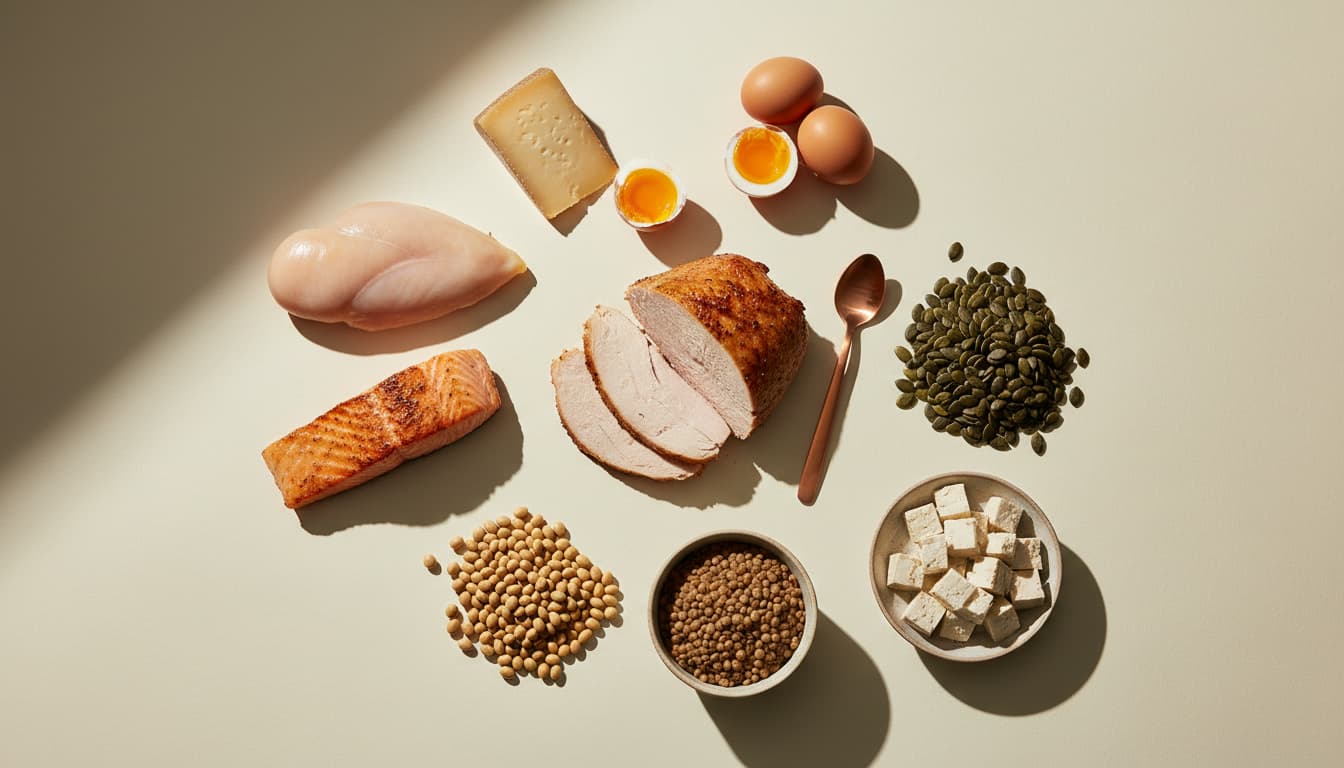
Pumpkin, sesame, and sunflower seeds are among the most tryptophan-dense foods by weight, carrying several hundred milligrams per 100 grams, because they are so protein-rich (USDA FoodData Central). In realistic snack portions of an ounce or two they still contribute a solid share of the daily need. They also stack the tryptophan with magnesium, zinc, and healthy fats, which is why seeds turn up near the top of so many nutrient rankings on this site. For a plant-based eater they are one of the most efficient sources.
- 02
Soybeans, tofu, and tempeh
Soy foods are the leading plant protein source of tryptophan, with tofu, tempeh, edamame, and soy milk all supplying meaningful amounts per serving because soy is a complete protein (USDA). For vegetarians and vegans, a serving of tofu or tempeh covers the daily requirement comfortably and, unlike most single plant proteins, provides all the essential amino acids at once. This is the same reason soy features in our whole-food protein rankings elsewhere.
- 03
Hard cheese, cottage cheese, and milk
Dairy is a reliable tryptophan source: hard cheeses like Parmesan are very dense per 100 grams, a cup of cottage cheese supplies several hundred milligrams, and a glass of milk adds a useful amount (USDA FoodData Central). The old habit of warm milk before bed has a kernel of biochemical logic in the tryptophan, though the effect on sleep from a normal serving is small. Dairy pairs the amino acid with calcium and complete protein, making it an easy everyday source.
- 04
Chicken, turkey, and fish
Poultry and fish are dense, practical tryptophan sources: a chicken or turkey breast or a serving of tuna or salmon each supplies several hundred milligrams, clearing the daily requirement in one portion (USDA). The key correction is that turkey is not special, it carries about the same tryptophan as chicken and less than seeds or hard cheese, so the Thanksgiving sleepiness story does not hold up. Any of these lean proteins does the job equally well.
- 05
Eggs, oats, peanuts, and dark chocolate
Eggs supply a solid dose of tryptophan in the white and yolk, oats and other whole grains contribute a moderate amount, peanuts and other nuts add more, and even dark chocolate carries a little (USDA). None is a standout on its own, but together they explain why a varied diet keeps tryptophan intake several times above the requirement without any planning. Oats before bed are a common example, though as with milk the real-world effect is gentle.
- 06
The carbohydrate twist: getting it into the brain
The counterintuitive fact is that eating more tryptophan does not straightforwardly raise brain serotonin, because tryptophan competes with other amino acids for the same transporter into the brain (National Academies). A pure protein meal, rich in all amino acids, can actually lower tryptophan's relative uptake, whereas a carbohydrate that triggers insulin clears the competing amino acids from the blood and lets proportionally more tryptophan through. This is the modest, real mechanism behind carb-heavy comfort foods and mood, and it explains why the food and the effect are not as direct as they seem.
How this was specified
- 01Inputs measured
- Retail price (dated) · label claim · Certificate of Analysis · third-party test (Informed Sport / NSF / ConsumerLab / Clean Label) · leucine per serving from COA, not marketing.
- 02Protocols tested
- Per-kg target from four literature ranges (IOM RDA, Phillips 2017, Morton 2018, ISSN). Brands scored against Moore 2015 leucine-per-dose threshold (~0.4 g/kg).
- 03Cost-basis verified
- $/gram of protein and $/gram of leucine at warehouse pricing (Costco), mail-order (Amazon), and DTC retail. Re-checked quarterly, flagged when drift exceeds 15%.
- 04Confidence level
- High on ranked order. Medium on absolute $/g (prices drift). Low on serving-size claims where COA is older than 18 months, flagged [VERIFY].
Every claim, cited.
The Larderlab Team builds evidence-led frameworks for eating, lifting, and stocking a kitchen. We cite every claim. We publish the spreadsheet when possible. We buy what we review at retail price. When new data lands, we revise with a dated note.
Next in this hub.
Foods High in Thiamin (Vitamin B1): The Densest Sources, by Milligrams
The RDA is 1.2 mg a day for men and 1.1 mg for women, and pork, fortified grains, legumes, and sunflower seeds cover it easily. The mg-per-serving ranking, why refined grains are fortified for a reason, and who is actually at risk of deficiency.
7 min · rev 2026-08-14Foods High in Riboflavin (Vitamin B2): The Densest Sources, by Milligrams
The RDA is 1.3 mg a day for men and 1.1 mg for women, and dairy, eggs, organ meats, and fortified cereals cover it easily. The mg-per-serving ranking, why milk in clear bottles loses it, and why bright yellow urine is nothing to worry about.
7 min · rev 2026-08-14Foods High in Lutein: The Densest Sources for Eye Health, by Milligrams
Lutein and its partner zeaxanthin are the carotenoids that concentrate in the retina, and cooked greens like kale and spinach top the list. The mg-per-serving ranking, why egg yolk punches above its weight, and what the AREDS2 eye-health evidence actually shows.
8 min · rev 2026-08-13Get the Larderlab Macro Planner.
A Google Sheet that calculates your protein target, splits it across 3-5 meals, and ranks 20 protein sources by $/gram. Free. Copy-and-modify your own version.
By subscribing, you agree to our Privacy Policy. Unsubscribe anytime.