Arsen in Reis: die Zahlen
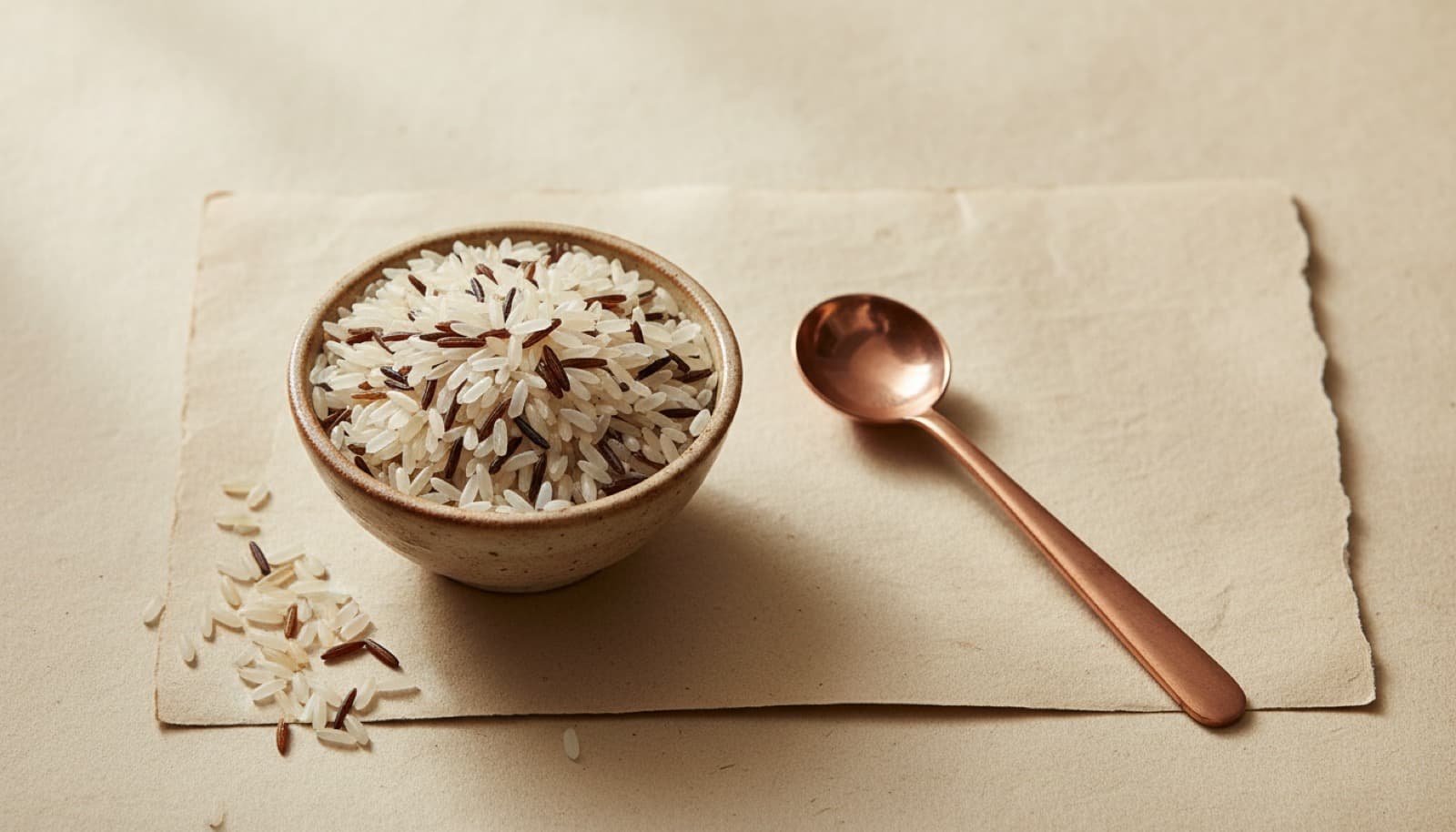
Anorganisches Arsen nach Reissorte (basmati, jasmine, brauner Reis, weißer Reis) und Herkunft, mit Kochmethoden, die die Belastung verringern.
Was als Nächstes gefragt wird.
- Ist Reis bei regelmäßigem Verzehr tatsächlich gefährlich?
- Für die meisten Erwachsenen nein. Die FDA-Modellierung von 2016 schätzte, dass der tägliche Reiskonsum bei typischen US-Mengen (~0,5 Portionen/Tag) <10 % der gesamten ernährungsbedingten Belastung durch anorganisches Arsen ausmacht. Das Risiko steigt für bestimmte Bevölkerungsgruppen: Säuglinge (Reisbrei + Verhältnis zum Körpergewicht), Personen mit Zöliakie bzw. glutenfreier Ernährung (Reismehl ersetzt alles) und Personen mit täglich 2+ Portionen. Für Personen mit ~1 Portion/Tag ist die Sortenwahl und Kochmethode wichtiger als der Verzicht auf Reis.
- Wie viel niedriger ist weißer Reis gegenüber braunem Reis beim Arsen?
- Laut den FDA-Gesamternährungsstudien rund 80 % niedriger beim anorganischen Arsen. Arsen reichert sich in den Kleie- und Keimschichten an, die bei der Verarbeitung von weißem Reis entfernt werden. Der Nährstoffkompromiss ist real (mehr Ballaststoffe, mehr B-Vitamine im braunen Reis), aber quantifizierbar: ein Verlust von ~2 g Ballaststoffen pro gekochter Tasse bei einer Arsenreduktion von 50-80 %. Für Personen mit hohem Reiskonsum ist weißer basmati die arsenoptimierte Wahl.
- Reduziert das Abspülen tatsächlich Arsen?
- In bescheidenem Maße, vielleicht 5-15 % je nach Spülvolumen und Dauer. Die größere Reduktion ergibt sich aus der Kochmethode: 6:1 Wasser zu Reis, kochen, abgießen (wie Nudeln). Raab 2009 maß eine Arsenreduktion von 35 % mit dieser Methode; Naito 2015 erreichte 57 % mit einem zusätzlichen Einweichen vorab. Das Abspülen allein ist ein erster Schritt mit geringem Aufwand; die Koch-und-Abgieß-Methode ist der entscheidende Hebel.
- Sind sowohl jasmine- als auch basmati-Reis arsenarm?
- basmati ist in den USA verkauften Proben durchweg niedriger als jasmine (Consumer Reports 2014, 2015; FDA-Gesamternährungsdaten). Thailändischer jasmine liegt im Mittelfeld. Der entscheidende Faktor ist eher die geografische Herkunft als die Sorte: Reis, der in Böden mit historischem Einsatz arsenhaltiger Pestizide angebaut wird (südliche US-Bundesstaaten, insbesondere Texas und Arkansas), weist unabhängig von der Sorte höhere Werte auf.
- Was ist mit in Kalifornien angebautem Reis?
- Kalifornischer Reis weist im Allgemeinen niedrigere Werte auf als Reis aus dem Süden der USA, aufgrund unterschiedlicher Bodengeschichte und Bewässerung. Lundberg Family Farms veröffentlicht Arsenprüfungen auf Chargenebene (~vierteljährlich). Kalifornischer Mittelkornreis, kalifornischer basmati und Lundbergs geprüfte Chargen sind sinnvolle in den USA angebaute Optionen, falls importierter basmati nicht verfügbar ist.
- Muss ich meinen eigenen Reis testen lassen?
- Nein. Lundberg veröffentlicht Chargenergebnisse; die FDA-Gesamternährungsstudie wird alle 1-2 Jahre aktualisiert; Consumer Reports verfügt über eine periodische Reisdatenbank. Gleichen Sie Marke + Herkunft + Sorte mit diesen Quellen ab. Die Labore, die Haushaltsuntersuchungen durchführen, berechnen 35-75 $/Probe für ICP-MS, was nur sinnvoll ist, wenn Sie täglich Reis essen und noch keine arsenarme Standardwahl getroffen haben.
- Gilt dies auch für Reisnudeln, Reismehl, Reisbrei?
- Ja, und in einigen Fällen sogar stärker. Reisbasierte glutenfreie Nudeln und Mehle verwenden im großen Stil häufig in den USA angebauten braunen Reis (höherer Arsengehalt). Reisbrei für Säuglinge ist die Kategorie mit der höchsten Bedenklichkeit, und die FDA legte 2020 einen Richtwert von 100 ppb anorganischem Arsen fest (von der FDA 2023 finalisiert). Für Erwachsene: Wenn Sie 3x/Woche Reisnudeln plus 3x/Woche Reis essen, beginnt Ihre kumulative Belastung relevant zu werden, wechseln Sie zu glutenfreien Grundlagen ohne Reis (Quinoa, Mais, Linsennudeln).
Jede Aussage, belegt.
- [01]FDA. 2016. Arsenic in Rice and Rice Products: Risk Assessment Report.
- [02]Consumer Reports. 2014. How much arsenic is in your rice? Updated data on 223 samples.
- [03]Raab A et al. 2009. Cooking rice in a high water to rice ratio reduces inorganic arsenic content. J Environ Monit 11(1):41-44.
- [04]Naito S et al. 2015. Effect of polishing and cooking on inorganic arsenic concentration in rice. J Food Prot 78(5):1100-1105.
- [05]WHO/JECFA. 2011. Safety evaluation of certain contaminants in food, inorganic arsenic. WHO Food Additives Series 63.
- [06]FDA. 2023. Inorganic Arsenic in Rice Cereals for Infants: Action Level Guidance (finalized).
Das Larderlab-Team entwickelt evidenzbasierte Rahmenwerke fürs Essen, Trainieren und Bestücken einer Küche. Wir belegen jede Aussage. Wir veröffentlichen die Tabelle, wo möglich. Wir kaufen, was wir testen, zum Ladenpreis. Wenn neue Daten erscheinen, überarbeiten wir mit einer datierten Notiz.
Als Nächstes in diesem Ressort.
Weiderind vs. Getreidemast: das Verhältnis wird besser, die Milligramm nicht
Die USDA führt grasgefüttertes Rinderhack mit 88 mg Omega-3 gesamt pro 100 g, davon 1 mg EPA und kein DHA. Das Fettsäureverhältnis verbessert sich auf Gras tatsächlich. Die absoluten Mengen bleiben zu klein für ein Omega-3-Ziel.
8 Min. · Rev. 2026-08-25Wildlachs vs Zuchtlachs: Omega-3, Schadstoffe und Kosten im Vergleich
Zuchtlachs ist fetter und oft höher im Gesamt-Omega-3 pro Portion, während Wildlachs magerer ist mit besserem Omega-Verhältnis und weniger Kalorien. Der ehrliche Vergleich zu Nährstoffen, Schadstoffen, Farbe, Kosten und warum beide eine gesunde Wahl sind.
8 Min. · Rev. 2026-08-12Wie man eine Lebensmittelbehauptung bewertet: die Larderlab-Methodik
Die sieben Schritte, die wir auf jeden Zutaten-Deep-Dive anwenden: die Ebenen einer Behauptung trennen, die Evidenzstufe gewichten, die Dosis prüfen und die Zahl finden, die es tatsächlich entscheidet.
11 Min. · Rev. 2026-06-29Holen Sie sich den Larderlab-Makroplaner.
Ein Google Sheet, das Ihren Proteinbedarf berechnet, ihn auf 3-5 Mahlzeiten verteilt und 20 Proteinquellen nach $/Gramm sortiert. Kostenlos. Kopieren und nach Belieben anpassen.
Mit der Anmeldung stimmen Sie unserer Datenschutzerklärung zu. Jederzeit kündbar.