How much vitamin A you actually need per day
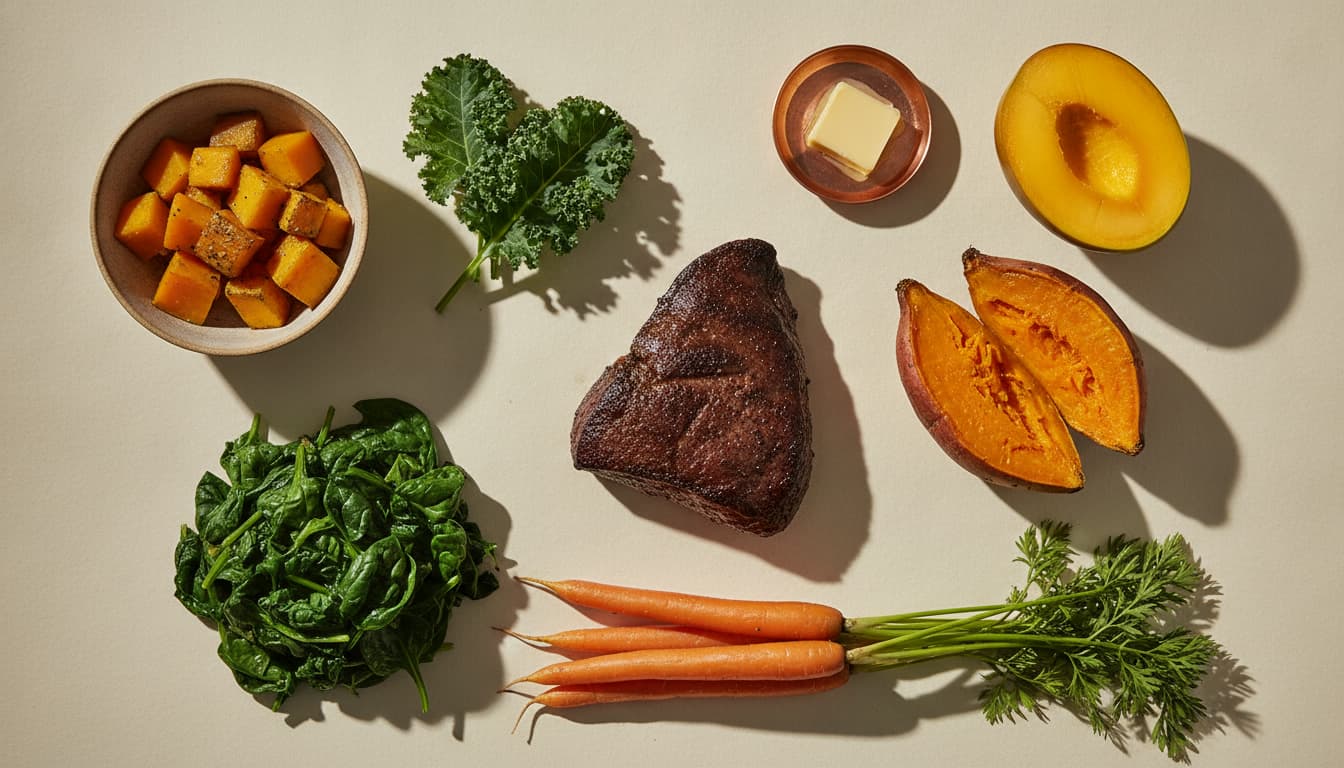
The RDA is 900 mcg RAE a day for men and 700 mcg for women, and the upper limit applies only to the preformed retinol in animal foods and supplements. The numbers, why beta-carotene from plants cannot overdose you, and why liver and pregnancy need special care.
- 01
The target: 900 mcg RAE men, 700 mcg women
The RDA for vitamin A is 900 mcg RAE a day for adult men and 700 mcg for women, rising to 770 mcg in pregnancy and 1,300 mcg while breastfeeding (NIH ODS). The unit, retinol activity equivalents, is designed to account for the two very different dietary forms of vitamin A. The target is easily met from a mix of colorful plants and some animal foods, and deficiency is rare in developed countries, though it remains a leading cause of preventable blindness in parts of the developing world.
- 02
Two forms: retinol vs beta-carotene
The key to vitamin A is that it comes in two forms that behave differently. Preformed retinol, from animal foods and supplements, is used directly and can build up to toxic levels, while provitamin A carotenoids like beta-carotene, from orange and green plants, are converted to vitamin A only as needed (NIH ODS). This difference drives everything else in the topic: the upper limit, the pregnancy cautions, and the reason plant sources are safe in essentially any amount while retinol sources are not.
- 03
Why beta-carotene cannot overdose you
The body converts plant carotenoids to active vitamin A at a regulated rate, only as much as it needs, so no matter how many carrots or sweet potatoes you eat, beta-carotene cannot cause vitamin A toxicity (NIH ODS). The worst that happens from very high carotene intake is carotenemia, a harmless orange tint to the skin that fades when intake drops. This is why the tolerable upper limit applies only to preformed retinol, and why colorful vegetables are a safe, unlimited way to support vitamin A status.
- 04
The 3,000 mcg upper limit applies to retinol only
The tolerable upper intake level is 3,000 mcg a day, and it applies only to preformed vitamin A (retinol) from animal foods and supplements, not to plant carotenoids (NIH ODS). Because retinol is fat-soluble and stored in the liver, chronically exceeding this level can cause toxicity, with symptoms ranging from headaches and nausea to liver damage and bone problems. This is the number to watch with liver, cod liver oil, and retinol supplements, and it is why vitamin A is one of the fat-soluble vitamins where excess is a genuine concern.
- 05
Liver and pregnancy need special care
Liver is so extraordinarily rich in retinol that a single serving can far exceed the upper limit, so it should be eaten only occasionally, and pregnant women are specifically advised to limit it (NIH ODS). This is because excess preformed vitamin A in early pregnancy is teratogenic, meaning it can cause birth defects. High-dose retinol supplements carry the same risk. This is one of the clearest cases where a nutritious food, liver, needs deliberate moderation, and where pregnancy changes the advice significantly.
- 06
Beta-carotene supplements and the smoker warning
While beta-carotene from food is safe in any amount, high-dose beta-carotene supplements are a different matter: large trials found they increased lung cancer risk in smokers and people exposed to asbestos (NIH ODS). This is a striking example of an isolated high-dose supplement behaving differently, and worse, than the same nutrient in food. It is a strong reason to get carotenoids from colorful vegetables rather than from isolated beta-carotene pills, especially for anyone who smokes.
What people ask us next.
- How much vitamin A do I need a day?
- The RDA is 900 mcg RAE a day for adult men and 700 mcg for women, rising to 770 mcg in pregnancy and 1,300 mcg while breastfeeding (NIH ODS). The unit, retinol activity equivalents, accounts for the two dietary forms of vitamin A. The target is easily met from a mix of colorful plants like carrots, sweet potatoes, and greens, plus some animal foods, and the tolerable upper limit of 3,000 mcg applies only to preformed retinol, not to plant carotenoids.
- What is the difference between retinol and beta-carotene?
- Retinol is preformed vitamin A, from animal foods and supplements, which the body uses directly and can store to toxic levels, while beta-carotene is a provitamin A carotenoid, from orange and green plants, which the body converts to vitamin A only as needed (NIH ODS). This difference is the key to the whole topic: retinol can cause toxicity and has an upper limit, whereas beta-carotene cannot cause toxicity because conversion is regulated, so plant sources are safe in essentially any amount.
- Can you get too much vitamin A?
- Yes, but only from preformed retinol, not from plants. The tolerable upper limit is 3,000 mcg a day of preformed vitamin A from animal foods and supplements, and chronically exceeding it can cause toxicity, with symptoms from headaches to liver damage, because retinol is stored in the liver (NIH ODS). Plant carotenoids like beta-carotene cannot cause toxicity because the body converts them only as needed. Liver, cod liver oil, and retinol supplements are the sources to watch, not carrots or sweet potatoes.
- Why do pregnant women need to limit vitamin A?
- Because excess preformed vitamin A (retinol) in early pregnancy is teratogenic, meaning it can cause birth defects (NIH ODS). Liver is extraordinarily rich in retinol, so a single serving can exceed the safe amount, which is why pregnant women are advised to limit liver and to avoid high-dose retinol supplements, including high-dose cod liver oil. Importantly, this warning applies only to the retinol form; beta-carotene from fruits and vegetables is safe in pregnancy because the body regulates its conversion.
- Are vitamin A or beta-carotene supplements safe?
- Retinol supplements can cause toxicity at high chronic doses and are risky in pregnancy, so they should be used cautiously and generally only for a diagnosed need (NIH ODS). Beta-carotene from food is safe in any amount, but high-dose beta-carotene supplements are a specific concern: large trials found they increased lung cancer risk in smokers and people exposed to asbestos. For most people, a diet with colorful vegetables and some animal foods meets vitamin A needs safely, so neither type of supplement is necessary.
Every claim, cited.
The Larderlab Team builds evidence-led frameworks for eating, lifting, and stocking a kitchen. We cite every claim. We publish the spreadsheet when possible. We buy what we review at retail price. When new data lands, we revise with a dated note.
Next in this hub.
Best Magnesium Forms: Glycinate vs Citrate vs Threonate vs Oxide
Which magnesium form for which use case, absorption data, dose ranges, and brand recommendations.
12 min · rev 2026-04-21Best Vitamin D Supplement, Ranked by $/1000 IU
Vitamin D3 supplements ranked by $/1000 IU of cholecalciferol, with D3-vs-D2, K2/magnesium cofactor notes, and third-party testing status.
10 min · rev 2026-06-22Is Vitamin D the Same as D3? The Difference That Actually Matters
Vitamin D is the family name. D2 and D3 are the two forms sold, both counted in the same units, and D3 raises blood 25(OH)D more per microgram. What the label words mean and when the difference is worth paying for.
7 min · rev 2026-08-21Get the Larderlab Macro Planner.
A Google Sheet that calculates your protein target, splits it across 3-5 meals, and ranks 20 protein sources by $/gram. Free. Copy-and-modify your own version.
By subscribing, you agree to our Privacy Policy. Unsubscribe anytime.