Low-histamine foods, by the evidence
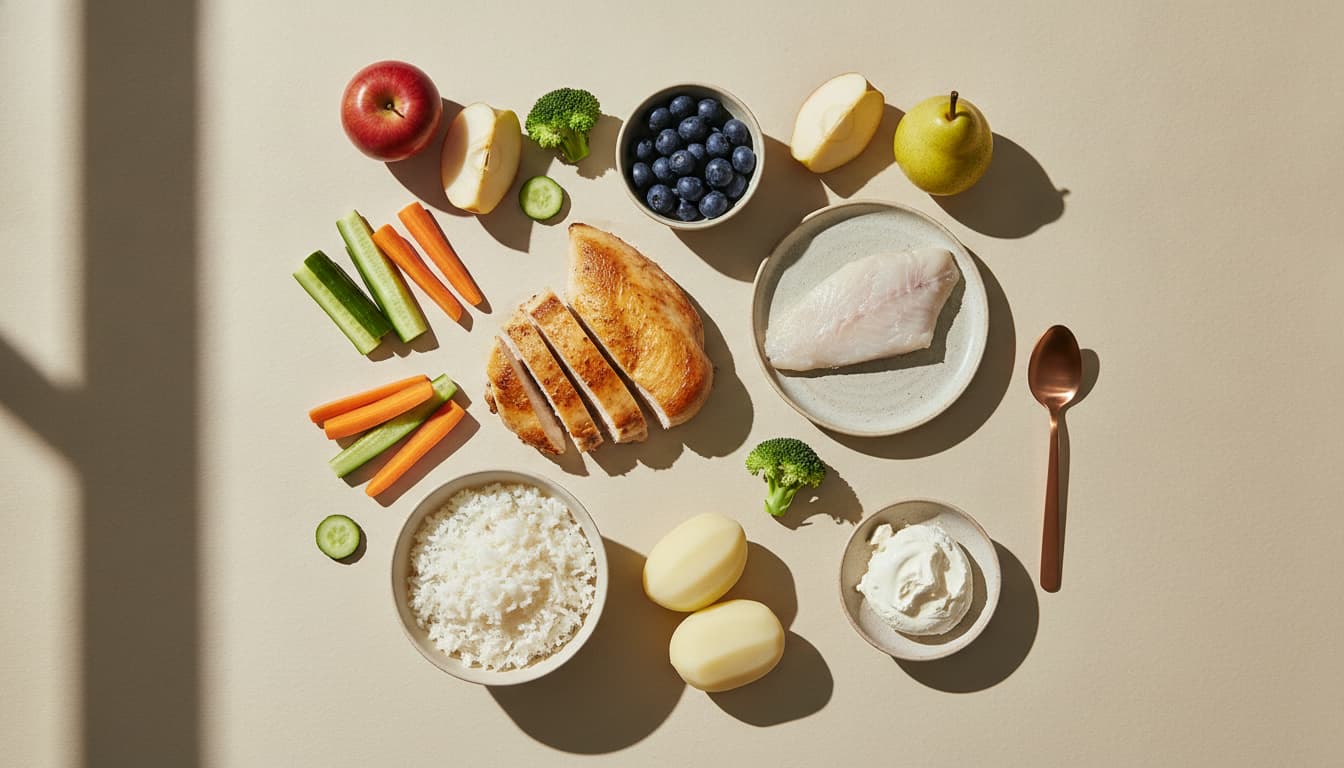
Histamine intolerance is not an allergy but a problem degrading histamine, and freshness matters more than any single food. The best-tolerated foods, which ones to avoid, why cooking does not help, and how an elimination diet, not a blood test, confirms it.
- 01
Freshly cooked meat and poultry: the safest protein
Fresh meat and poultry, cooked and eaten the same day, are among the best-tolerated protein sources on a low-histamine diet, because histamine forms as the meat ages rather than being present at slaughter (Maintz and Novak 2007). The key is freshness and speed: buy fresh or frozen, cook promptly, and either eat immediately or freeze the surplus rather than leaving cooked meat in the fridge for days, where histamine climbs. Processed, cured, and aged meats, salami, cured ham, bacon, and deli meats, are the opposite and belong on the avoid list. This is the clearest illustration of the whole diet, the same food is low or high depending only on how long it has aged.
- 02
Very fresh or frozen-at-sea fish only
Fish is the classic histamine problem, because oily fish like tuna, mackerel, and sardines accumulate histamine rapidly once out of cold storage, the same mechanism behind scombroid food poisoning. On a low-histamine diet, fish is allowed only when it is exceptionally fresh or, more reliably, frozen at sea and cooked straight from frozen. Tinned, smoked, marinated, and deli-counter fish are high and best avoided. This is where freshness is not just a preference but a safety issue, and it is the reason a low-histamine guide cannot simply label fish good or bad, only fresh or aged. When in doubt, frozen-at-sea white fish is the safer choice than anything that has sat on ice.
- 03
Most fresh vegetables, except tomato, spinach, and eggplant
The majority of fresh vegetables are well tolerated and form the bulk of a low-histamine plate, including carrots, cucumber, zucchini, broccoli, cauliflower, lettuce, and most leafy greens other than spinach. The exceptions to avoid are tomato, spinach, eggplant, and avocado, which are naturally higher in histamine or act as liberators, along with anything fermented such as sauerkraut and pickles (Reese et al. 2021). Freshness applies here too: cut vegetables left for days rise in histamine, so buy and prepare close to eating. Because the allowed list is broad, vegetables are the easiest food group to keep varied and generous on this diet.
- 04
Low-histamine fruit: apples, pears, blueberries, mango
Fruit splits cleanly. The well-tolerated group includes apples, pears, blueberries, and mango, while the ones to avoid are citrus fruits, strawberries, and to a lesser extent bananas and pineapple, which act as histamine liberators even though they are not especially high in histamine themselves (Maintz and Novak 2007). The evidence for the liberator effect is weaker than for the aged high-histamine foods, so some people tolerate small amounts, which is exactly the kind of thing a structured reintroduction phase is designed to test. Fresh whole fruit is preferable to dried or overripe fruit, which concentrates and accumulates histamine as it ages.
- 05
Rice, oats, potatoes, and freshly baked bread
Plain starches are among the most reliably low-histamine foods and anchor most meals on this diet: rice, oats, corn, quinoa, potatoes, and freshly baked bread are all generally well tolerated. The cautions are specific, yeast-heavy and long-fermented breads like sourdough can be a problem for some because fermentation raises histamine, and anything with added vinegar, aged cheese, or cured meat inherits their histamine. Freshly baked over long-fermented, and plain over dressed, is the rule. Because grains and potatoes are broadly safe, they make it straightforward to build satisfying meals around a fresh protein and fresh vegetables without much guesswork.
- 06
Fresh young dairy, not aged cheese
Dairy divides sharply by age. Fresh, young products, cream cheese, ricotta, mozzarella, butter, and fresh milk, are usually well tolerated, while aged and ripened cheeses like parmesan, cheddar, gouda, and blue cheese are among the highest-histamine foods that exist, because the same ripening that develops their flavor accumulates histamine (Maintz and Novak 2007). Fermented dairy such as some yogurts and kefir sits in between and varies by person. This is another case where the label on the package matters less than the process: the longer a cheese has been aged, the higher its histamine, so the fresher and milder the choice, the safer it is.
- 07
What to avoid, and why cooking does not help
The consistent high-histamine foods to avoid are aged cheese, cured and processed meat, most tinned and smoked fish, fermented foods (sauerkraut, soy sauce, miso, vinegar, kombucha), and alcohol, with red wine and beer being especially problematic because alcohol both carries histamine and blocks the DAO enzyme that clears it (Reese et al. 2021). Two facts trip people up: cooking does not destroy histamine, which is heat-stable, so reheating old food does not make it safe, and leftovers accumulate histamine in the fridge, so a fresh meal frozen immediately is safer than the same meal eaten three days later. Because a strict low-histamine diet can become nutritionally narrow, it is meant to be a short diagnostic phase with reintroduction, not a permanent way of eating.
How this was specified
- 01Inputs measured
- Retail price (dated) · label claim · Certificate of Analysis · third-party test (Informed Sport / NSF / ConsumerLab / Clean Label) · leucine per serving from COA, not marketing.
- 02Protocols tested
- Per-kg target from four literature ranges (IOM RDA, Phillips 2017, Morton 2018, ISSN). Brands scored against Moore 2015 leucine-per-dose threshold (~0.4 g/kg).
- 03Cost-basis verified
- $/gram of protein and $/gram of leucine at warehouse pricing (Costco), mail-order (Amazon), and DTC retail. Re-checked quarterly, flagged when drift exceeds 15%.
- 04Confidence level
- High on ranked order. Medium on absolute $/g (prices drift). Low on serving-size claims where COA is older than 18 months, flagged [VERIFY].
Every claim, cited.
- [01]Maintz L, Novak N. 2007. Histamine and histamine intolerance. American Journal of Clinical Nutrition 85(5):1185-1196. The DAO mechanism, symptoms, and the role of aging and fermentation in raising food histamine.
- [02]Reese I, Ballmer-Weber B, Beyer K, et al. 2021. Guideline on management of suspected adverse reactions to ingested histamine (German-language allergy societies). Allergologie Select 5:305-314. Prevalence, diagnosis by elimination diet, and the food classification.
- [03]Comas-Baste O, Sanchez-Perez S, Veciana-Nogues MT, et al. 2020. Histamine intolerance: the current state of the art. Biomolecules 10(8):1181. Review of DAO deficiency, food histamine content, and dietary management.
- [04]US Department of Agriculture and food-safety authorities. Scombroid (histamine) fish poisoning: histamine accumulation in improperly stored oily fish. Basis for the freshness and frozen-at-sea guidance.
The Larderlab Team builds evidence-led frameworks for eating, lifting, and stocking a kitchen. We cite every claim. We publish the spreadsheet when possible. We buy what we review at retail price. When new data lands, we revise with a dated note.
Next in this hub.
Foods High in Glutathione: Why You Cannot Really Eat Your Way to More
Glutathione is the body's own master antioxidant, but the glutathione in food is largely broken down before absorption. The foods that contain it, why the sulfur-amino-acid precursors matter more, and what the evidence says about boosting your own levels.
8 min · rev 2026-08-14Foods High in Lectins: The Real Risk, and Why Cooking Solves It
Lectins are proteins in beans, grains, and nightshades, and raw kidney beans really can make you sick, but cooking destroys them. The ranking, why the anti-lectin diet overstates the danger, and why most high-lectin foods are among the healthiest.
8 min · rev 2026-08-13Foods High in Nitrates: The Vegetables That Boost Nitric Oxide
Dietary nitrates from vegetables convert to nitric oxide, which relaxes blood vessels and can lower blood pressure and aid exercise. The ranking led by beetroot and leafy greens, why vegetable nitrates are healthy while processed-meat nitrates are not, and what the beet-juice evidence shows.
8 min · rev 2026-08-12Get the Larderlab Macro Planner.
A Google Sheet that calculates your protein target, splits it across 3-5 meals, and ranks 20 protein sources by $/gram. Free. Copy-and-modify your own version.
By subscribing, you agree to our Privacy Policy. Unsubscribe anytime.