Best fish oil, ranked by cost per mg of EPA+DHA
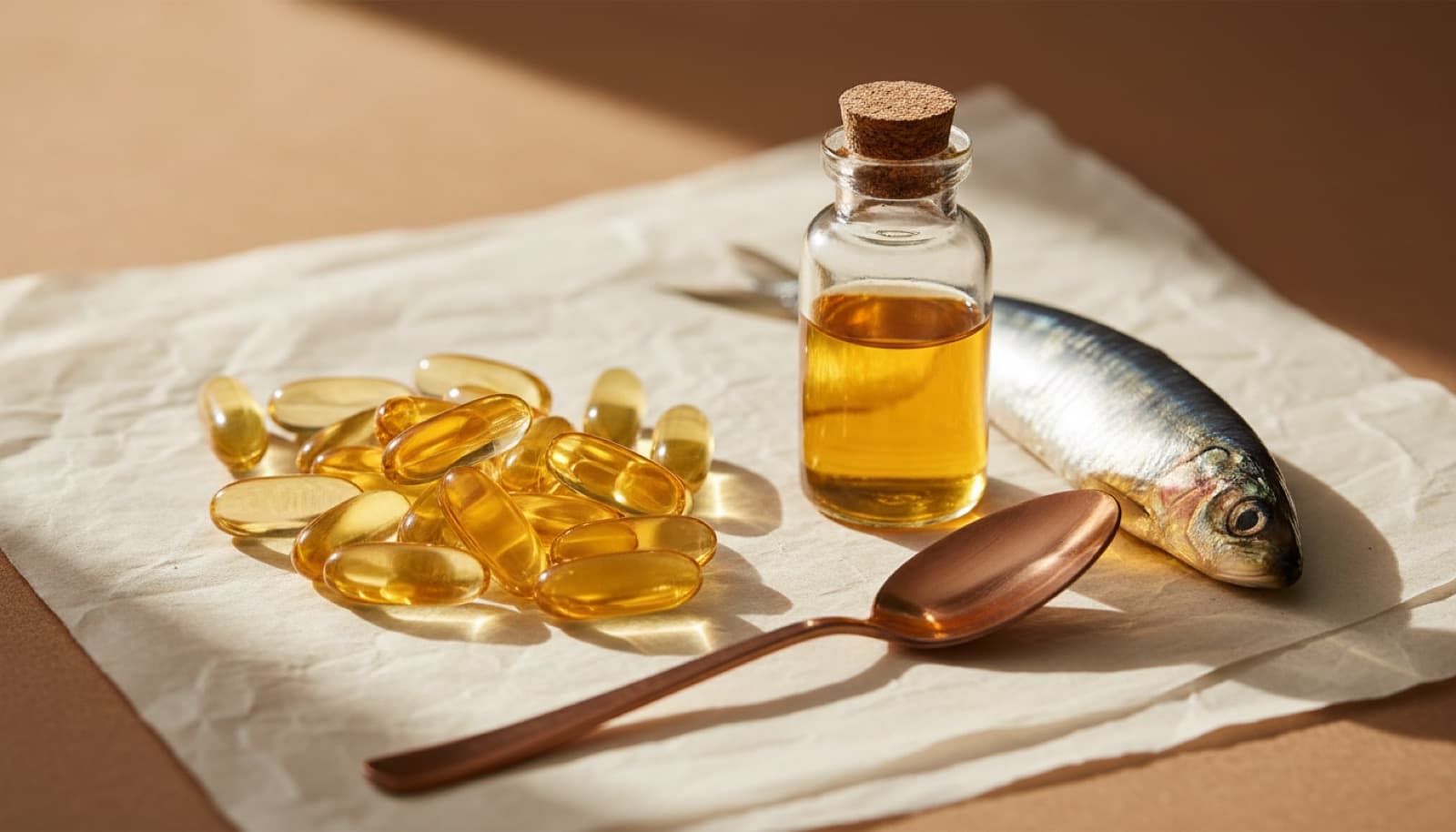
Fish oil ranked by $/mg of combined EPA+DHA, the actual active dose, not per softgel. Triglyceride vs ethyl ester form and third-party testing flagged.
Thorne Omega-3 with CoQ10
Thorne Omega-3 with CoQ10 delivers 2.4 g (2,400 mg) combined EPA+DHA per 4-capsule dose in re-esterified triglyceride form, the form with measurably higher bioavailability than ethyl ester (Dyerberg 2010). Thorne publishes third-party testing for oxidation markers and heavy metals, and the product is NSF Certified for Sport. On $/mg of active EPA+DHA it lands near the median tier rather than the cheapest, so it is not the absolute unit-cost winner. The trade is documented purity and oxidation control at a defensible price, plus a 30 mg CoQ10 add-on of marginal independent value. For pure $/mg, Nordic Naturals Ultimate Omega and Sports Research undercut it; choose Thorne when third-party documentation is the deciding factor. For the mechanism behind the dose, our explainer on what omega-3 does covers EPA, DHA, and what the trials actually found.
Every product, ranked.
| # | Notes | Confidence | |||
|---|---|---|---|---|---|
| 01 | Sports Research Triple Strength Omega-3 | Best $/mg EPA+DHA | 01 | 1,040 mg EPA+DHA per single softgel, re-esterified triglyceride form, IFOS-tested with published oxidation (TOTOX) and heavy-metal results. ~$0.004/mg EPA+DHA. The unit-cost winner: high concentration per softgel keeps the active-mg price at the bottom of the range. | High |
| 02 | Kirkland Signature Fish Oil 1000 mg | Cheapest per bottle, mid per mg | 02 | 300 mg EPA+DHA per 1000 mg softgel, ethyl ester form, USP-verified. ~$0.005/mg EPA+DHA. Cheap per bottle but the low concentration means more softgels per dose; USP verification covers potency and contaminants but the ethyl ester form absorbs less efficiently. | High |
| 03 | Nordic Naturals Ultimate Omega | Best mainstream triglyceride | 03 | 640 mg EPA+DHA per 2-softgel serving, re-esterified triglyceride form, third-party tested with published freshness data. ~$0.008/mg EPA+DHA. The category reference for triglyceride-form oil; pay the median price for consistent low-oxidation lots. | High |
| 04 | Thorne Omega-3 with CoQ10 | Best third-party documented | 04 | 2,400 mg EPA+DHA per 4-capsule dose, triglyceride form, NSF Certified for Sport with published oxidation and heavy-metal testing. ~$0.009/mg EPA+DHA. The pick when third-party documentation and anti-doping certification outrank raw unit cost. | Medium |
| 05 | Carlson Maximum Omega 2000 | High concentration, liquid option | 05 | 1,400 mg EPA+DHA per 2-softgel serving, triglyceride form, IFOS five-star rated. ~$0.009/mg EPA+DHA. Carlson also sells a liquid at lower $/mg for readers who tolerate it; the softgel sits at the median. | Medium |
| 06 | Viva Naturals Triple Strength Omega-3 | Budget triglyceride | 06 | 1,060 mg EPA+DHA per 2-softgel serving, triglyceride form, third-party tested. ~$0.007/mg EPA+DHA. Lower brand premium than Nordic Naturals at a similar concentration; testing documentation is less detailed than IFOS-rated brands. | Medium |
| 07 | NOW Foods Ultra Omega-3 | Budget ethyl ester | 07 | 750 mg EPA+DHA per 2-softgel serving, ethyl ester form, GMP and lot-tested. ~$0.006/mg EPA+DHA. Inexpensive per mg, but the ethyl ester form trades absorption efficiency for price; take with a fat-containing meal. | Medium |
| 08 | OmegaVia Ultra Concentrated Omega-3 | Highest concentration per softgel | 08 | 1,105 mg EPA+DHA per single softgel, re-esterified triglyceride form, IFOS-tested. ~$0.014/mg EPA+DHA. Fewest pills per dose of any product here; you pay a concentration premium that pushes it toward the upper tier on $/mg. | Medium |
| 09 | Nutrigold Triple Strength Omega-3 Gold | Solid mid-tier triglyceride | 10 | 1,060 mg EPA+DHA per 2-softgel serving, triglyceride form, IFOS-tested with published purity data. ~$0.010/mg EPA+DHA. Comparable to Nordic Naturals on form and testing; choose on price at time of purchase. | Medium |
Named, with the reason.
Barlean's Omega-3 Fish Oil
Skip on $/mg (flavored liquid markup)Roughly 720 mg EPA+DHA per teaspoon, triglyceride form, flavored emulsion. ~$0.020/mg EPA+DHA. The emulsified flavor format carries a steep active-mg markup; buy a plain triglyceride softgel and spend the difference on dose.
How this was specified
- 01Inputs measured
- Retail price (dated) · label claim · Certificate of Analysis · third-party test (Informed Sport / NSF / ConsumerLab / Clean Label) · leucine per serving from COA, not marketing.
- 02Protocols tested
- Per-kg target from four literature ranges (IOM RDA, Phillips 2017, Morton 2018, ISSN). Brands scored against Moore 2015 leucine-per-dose threshold (~0.4 g/kg).
- 03Cost-basis verified
- $/gram of protein and $/gram of leucine at warehouse pricing (Costco), mail-order (Amazon), and DTC retail. Re-checked quarterly, flagged when drift exceeds 15%.
- 04Confidence level
- High on ranked order. Medium on absolute $/g (prices drift). Low on serving-size claims where COA is older than 18 months, flagged [VERIFY].
What people ask us most.
- How much EPA+DHA per day do I actually need?
- For general cardiovascular maintenance the common target is 250-500 mg combined EPA+DHA per day, the range the NIH Office of Dietary Supplements cites as adequate intake from oily fish or supplements. For elevated triglycerides, trial doses run 2,000-4,000 mg/day under clinical supervision (the dose used in prescription-grade formulations). Read the EPA+DHA line on the label, not the total fish oil figure: a 1000 mg softgel is often only ~300 mg EPA+DHA, so three softgels may be needed to clear even a 500 mg/day target.
- Triglyceride form vs ethyl ester, does it matter?
- Natural fish oil is in triglyceride form; concentrating it commonly converts it to ethyl ester, which can be re-esterified back to triglyceride at added cost. Dyerberg 2010 measured higher absorption of EPA+DHA from triglyceride and free-fatty-acid forms than from ethyl ester over a two-week intake. The practical effect is modest and ethyl ester still works, especially taken with a fat-containing meal, but at equal $/mg the triglyceride form is the better buy.
- Is fish oil worth it, and what does the evidence show?
- The cardiovascular evidence is mixed and dose-dependent. The Hu 2019 JAHA meta-analysis of 13 trials (over 127,000 participants) found small reductions in cardiovascular and coronary mortality that scaled with dose. Earlier secondary-prevention trials like GISSI-Prevenzione showed benefit, while several recent primary-prevention trials at ~1 g/day were null. The AHA science advisory supports omega-3 for specific patient groups rather than blanket use. For most people, 2-3 servings of oily fish per week is the evidence-led default and supplements fill the gap when intake is low.
- How do I avoid rancid or oxidized fish oil?
- Oxidation is measured by TOTOX (total oxidation value); independent programs like IFOS publish per-lot TOTOX and the GOED voluntary standard caps it at 26. Buy products that publish third-party oxidation testing, check for an expiration date well in the future, and store capsules cool and dark. A strong fishy smell or taste on the burp, or a bitter softgel, signals oxidation; a fresh product should be close to odorless. Liquids oxidize faster once opened than softgels.
- Fish oil vs algae oil for vegans?
- Algae oil is the direct vegan source of preformed EPA+DHA and is the only plant option that supplies DHA without conversion. Flax, chia, and walnut provide ALA, but humans convert ALA to DHA at low single-digit percentages, so ALA is not a reliable EPA+DHA substitute. Algae oil typically costs more per mg of EPA+DHA than concentrated fish oil and often supplies more DHA than EPA; for non-vegans fish oil is cheaper per active mg, for vegans algae oil is the only equivalent.
- Do I still need fish oil if I eat fish?
- If you eat 2-3 servings of oily fish per week (salmon, sardines, mackerel, herring), you are likely meeting the 250-500 mg/day EPA+DHA maintenance range and a supplement adds little. A single 100 g serving of farmed salmon supplies roughly 1,500-2,000 mg EPA+DHA. Supplements earn their place when fish intake is low, when a clinician has set a high therapeutic dose for triglycerides, or when mercury exposure from larger fish is a concern and a tested low-contaminant oil is preferred.
A published Certificate of Analysis from a ranked brand that contradicts the label claim we scored against. An independent lab result (Clean Label, ConsumerLab) finding heavy-metal or amino-spiking failures on a current top pick. A peer-reviewed meta-analysis that shifts the leucine-per-dose threshold. Any of those triggers a dated revision within a week.
Every claim, cited.
- [01]Hu Y et al. 2019. Marine omega-3 supplementation and cardiovascular disease: an updated meta-analysis of 13 randomized controlled trials involving 127,477 participants. J Am Heart Assoc 8(19):e013543.
- [02]GISSI-Prevenzione Investigators. 1999. Dietary supplementation with n-3 polyunsaturated fatty acids and vitamin E after myocardial infarction: results of the GISSI-Prevenzione trial. Lancet 354(9177):447-455.
- [03]Rimm EB et al. 2018. Seafood long-chain n-3 polyunsaturated fatty acids and cardiovascular disease: a science advisory from the American Heart Association. Circulation 138(1):e35-e47.
- [04]Dyerberg J et al. 2010. Bioavailability of marine n-3 fatty acid formulations. Prostaglandins Leukot Essent Fatty Acids 83(3):137-141.
- [05]NIH Office of Dietary Supplements. Omega-3 Fatty Acids: Fact Sheet for Health Professionals.
The Larderlab Team builds evidence-led frameworks for eating, lifting, and stocking a kitchen. We cite every claim. We publish the spreadsheet when possible. We buy what we review at retail price. When new data lands, we revise with a dated note.
Next in this hub.
How Much Omega-3 Per Day? The EPA+DHA Target, Not the Fish-Oil Number
For general health, 250-500 mg combined EPA+DHA per day. Lowering triglycerides takes 2-4 g/day under a clinician. The daily number by goal, and why you read the EPA+DHA line, not the total fish-oil weight.
8 min · rev 2026-07-01What Does Omega-3 Do? EPA, DHA, and What the Trials Show
Omega-3s (EPA and DHA) are structural fats that lower triglycerides, support the brain and eyes, and modulate inflammation. What they do, and the dose that does it.
8 min · rev 2026-06-28Foods High in Omega-3, Ranked by EPA+DHA per Serving
Salmon (~1.5-2 g), sardines (~1.4 g), and mackerel (~2.5 g) per 100 g lead on EPA+DHA. The per-serving ranking, why plant ALA does not count the same, and when food beats a capsule.
8 min · rev 2026-07-01Get the Larderlab Macro Planner.
A Google Sheet that calculates your protein target, splits it across 3-5 meals, and ranks 20 protein sources by $/gram. Free. Copy-and-modify your own version.
By subscribing, you agree to our Privacy Policy. Unsubscribe anytime.