Best electrolyte powders, 2026: ranked by $/mg of sodium
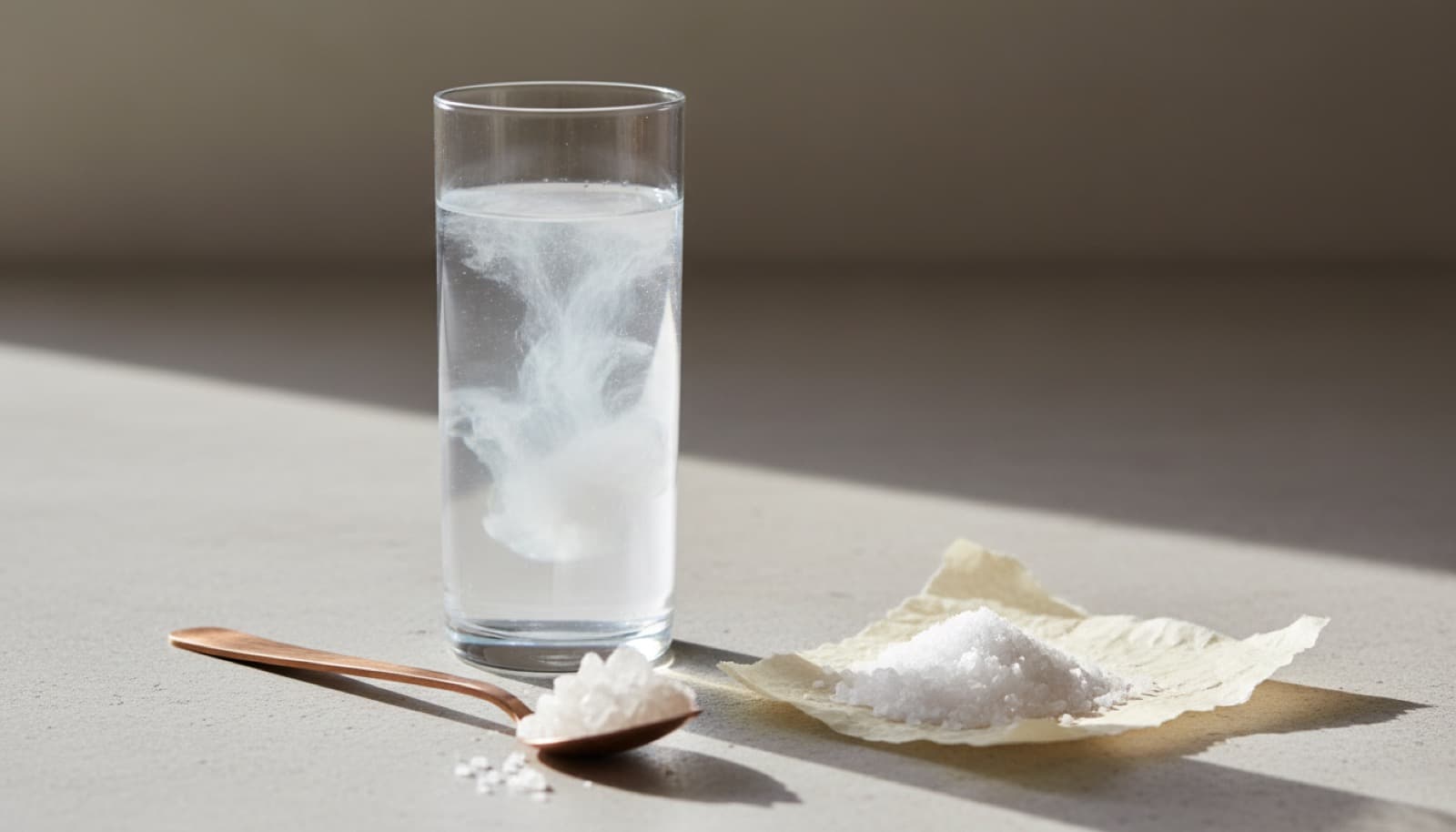
Eight electrolyte powders ranked on cost-per-mg of sodium, the actual ingredient most consumers under-dose. LMNT, Liquid IV, Re-Lyte, and 5 alternatives, with the failure modes nobody publishes.
Re-Lyte (Redmond)
810 mg sodium per serving (vs LMNT's 1,000 mg, Liquid IV's 500 mg) at ~$0.0024/mg sodium, lower than LMNT's $0.0028 and well below Liquid IV's $0.005. Real-salt-derived trace minerals are a soft differentiator, the mineral profile is more complete than synthetic sodium chloride alone, though the published evidence on trace minerals at this dose is thin. No added sugar, stevia-sweetened, available unflavored for cooking-water mixing. Before buying any powder, our primer on what electrolytes are explains who actually needs to replace them and why sodium is the one to prioritize.
Every product, ranked.
| # | Notes | Confidence | |||
|---|---|---|---|---|---|
| 01 | Re-Lyte (Redmond) | Best overall $/mg sodium | 01 | 810 mg sodium, 400 mg potassium, 60 mg magnesium per serving. ~$0.0024/mg sodium at bulk pricing. No sugar, no sugar alcohols, real-salt-derived minerals. Direct-from-Redmond shipping or Amazon. | High |
| 02 | LMNT | Best mass-market with strongest sodium | 02 | 1,000 mg sodium per stick pack, the highest per-serving dose in the category. ~$0.0028/mg sodium at the 30-pack price. Stevia-sweetened, no sugar. Premium pricing reflects brand and stick-pack convenience; the underlying formulation is comparable to Re-Lyte at +20% cost. | High |
| 03 | Liquid IV Hydration Multiplier | Most accessible (retail-available) | 03 | 500 mg sodium, but 11 g of cane sugar per stick. The sugar is intentional for glucose-mediated absorption (oral rehydration solution principle), but readers using electrolytes for low-carb / fasted contexts should skip. ~$0.005/mg sodium. | High |
| 04 | Ultima Replenisher | Best sugar-free mass-market | 04 | 250 mg sodium per serving, lower than ideal for active sweat-loss replacement but adequate for daily hydration. Stevia-sweetened, zero sugar, $0.0048/mg sodium. | Medium |
| 05 | Drip Drop ORS | Best medical-grade oral rehydration | 05 | WHO-aligned ORS formulation: 330 mg sodium + 8 g sugar (the glucose-sodium co-transport ratio that maximizes absorption rate). Best choice for acute dehydration recovery (illness, heat exposure). $0.0044/mg sodium. | Medium |
| 06 | Nuun Sport tablets | Best tablet format | 06 | 300 mg sodium per tablet, dropped in water. Travel-friendly form factor, no plastic single-serve waste. ~$0.005/mg sodium. Trace sugar (1 g) for flavor, not glucose-transport-meaningful. | Medium |
| 07 | Pedialyte Advanced Care | Best OTC retail for acute use | 07 | OTC retail availability is the differentiator. 370 mg sodium per 8 oz, with 9 g sugar. Wider retail distribution than any of the others, every grocery and pharmacy carries it. $0.005/mg sodium at unit pricing. | Medium |
| 08 | DIY (1/2 tsp salt + 1/4 tsp Lo-Salt potassium chloride) | Best $/mg sodium absolute | 08 | 1,150 mg sodium + 600 mg potassium for ~$0.001 per serving from bulk salt and Lo-Salt potassium chloride. The cheapest reliable electrolyte mix in this comparison. Trade-offs: no flavoring, requires kitchen measurement, no magnesium without separate supplementation. The economic ceiling for the category. | Medium |
How this was specified
- 01Inputs measured
- Retail price (dated) · label claim · Certificate of Analysis · third-party test (Informed Sport / NSF / ConsumerLab / Clean Label) · leucine per serving from COA, not marketing.
- 02Protocols tested
- Per-kg target from four literature ranges (IOM RDA, Phillips 2017, Morton 2018, ISSN). Brands scored against Moore 2015 leucine-per-dose threshold (~0.4 g/kg).
- 03Cost-basis verified
- $/gram of protein and $/gram of leucine at warehouse pricing (Costco), mail-order (Amazon), and DTC retail. Re-checked quarterly, flagged when drift exceeds 15%.
- 04Confidence level
- High on ranked order. Medium on absolute $/g (prices drift). Low on serving-size claims where COA is older than 18 months, flagged [VERIFY].
What people ask us most.
- How much sodium do I actually need from electrolytes?
- Depends on sweat rate. Sedentary adults: 1,500–2,300 mg/day total dietary sodium per the IOM 2019 sodium DRI; most US adults already exceed this from food alone. Active adults losing 1+ liter of sweat per session: add 500–1,000 mg per workout-hour from electrolyte drinks. Endurance athletes (2+ hour sessions): the Dunford 2017 review (Curr Opin Clin Nutr Metab Care) supports 700–1,500 mg/hr of sodium replacement during exercise. The 1,000 mg per LMNT serving is sized for the active-adult / endurance-athlete need.
- Why is potassium hard to dose?
- Two reasons. First, FDA caps over-the-counter potassium supplements at 99 mg per dose because of cardiac risk at high boluses. Branded electrolytes evade this through the food-product classification, but most cap out at 200–400 mg per serving. Second, the recommended daily intake is 3,400 mg (men) / 2,600 mg (women), and most adults achieve this from food (bananas: 420 mg each; potatoes: 600+ mg; spinach: 840 mg/cup cooked). Potassium replacement from electrolytes is a marginal add to a generally adequate dietary intake.
- What about magnesium in these formulas?
- Most electrolyte mixes include 50–100 mg magnesium, which is ~12–25% of the RDA. This is too low to address magnesium deficiency on its own. If sleep quality or muscle cramps are the goal, dose magnesium glycinate at 200–400 mg elemental separately (see our `best-magnesium-forms` post). Use the electrolyte mix for hydration; use a dedicated magnesium supplement for the magnesium-specific endpoints.
- Is the sugar in Liquid IV doing anything?
- Yes, in the right context. The WHO oral rehydration solution principle is that sodium-glucose co-transport (SGLT-1) at the intestinal brush border accelerates water absorption when glucose and sodium are dosed together at a 1:1 molar ratio. Liquid IV's 11 g sugar + 500 mg sodium delivers approximately this ratio. For acute dehydration (post-illness, heat exposure), the sugar is functional. For daily hydration in a low-carb diet, the sugar is calorie load without rehydration benefit relative to a stevia-sweetened alternative.
- Why no Gatorade?
- Insufficient sodium for the active-adult use case. Standard Gatorade delivers ~160 mg sodium per 12 oz with 21 g sugar. Adequate for retail-mass-market casual hydration, under-dosed for the endurance-athlete or low-carb dietary context that drives most electrolyte-powder buying decisions. Gatorade Endurance Formula doubles the sodium to 320 mg/12 oz but still trails the 500–1,000 mg dose in this comparison. Reasonable cheap-and-everywhere option; not a contender for the ranked list.
A published Certificate of Analysis from a ranked brand that contradicts the label claim we scored against. An independent lab result (Clean Label, ConsumerLab) finding heavy-metal or amino-spiking failures on a current top pick. A peer-reviewed meta-analysis that shifts the leucine-per-dose threshold. Any of those triggers a dated revision within a week.
Every claim, cited.
- [01]IOM 2019. Dietary Reference Intakes for Sodium and Potassium.
- [02]Dunford M. 2017. Hydration and electrolyte balance in athletes. Curr Opin Clin Nutr Metab Care 20(4):301-309.
- [03]WHO/UNICEF. 2002. Oral Rehydration Salts: production of the new ORS.
- [04]Hew-Butler T et al. 2017. Statement of the 3rd International Exercise-Associated Hyponatremia Consensus Conference. Br J Sports Med 49(22):1432-1446.
- [05]FDA Code of Federal Regulations 21 CFR §201.306, potassium supplement cap.
The Larderlab Team builds evidence-led frameworks for eating, lifting, and stocking a kitchen. We cite every claim. We publish the spreadsheet when possible. We buy what we review at retail price. When new data lands, we revise with a dated note.
Next in this hub.
Does Gatorade Have Electrolytes? The Milligrams Per Bottle, Compared
Yes: about 460 mg of sodium and 130 mg of potassium per litre, per USDA branded data. Set against an American football player losing sodium at roughly 1,290 mg an hour, the numbers explain what it is and is not for.
8 min · rev 2026-08-20Best Multivitamin, 2026: Ranked by Nutrient Coverage Per Dollar
Eight multivitamins scored on the 13 RDA-relevant nutrients an actual diet typically under-delivers. Methylated B-vitamins, the iron-versus-no-iron split, and the cost-per-day math.
10 min · rev 2026-04-29What Are Electrolytes? The Minerals, the Roles, and the Dose
Electrolytes are charged minerals, sodium, potassium, magnesium, chloride, that run hydration, nerve signaling, and muscle contraction. What they do and how much you need.
8 min · rev 2026-06-28Get the Larderlab Macro Planner.
A Google Sheet that calculates your protein target, splits it across 3-5 meals, and ranks 20 protein sources by $/gram. Free. Copy-and-modify your own version.
By subscribing, you agree to our Privacy Policy. Unsubscribe anytime.