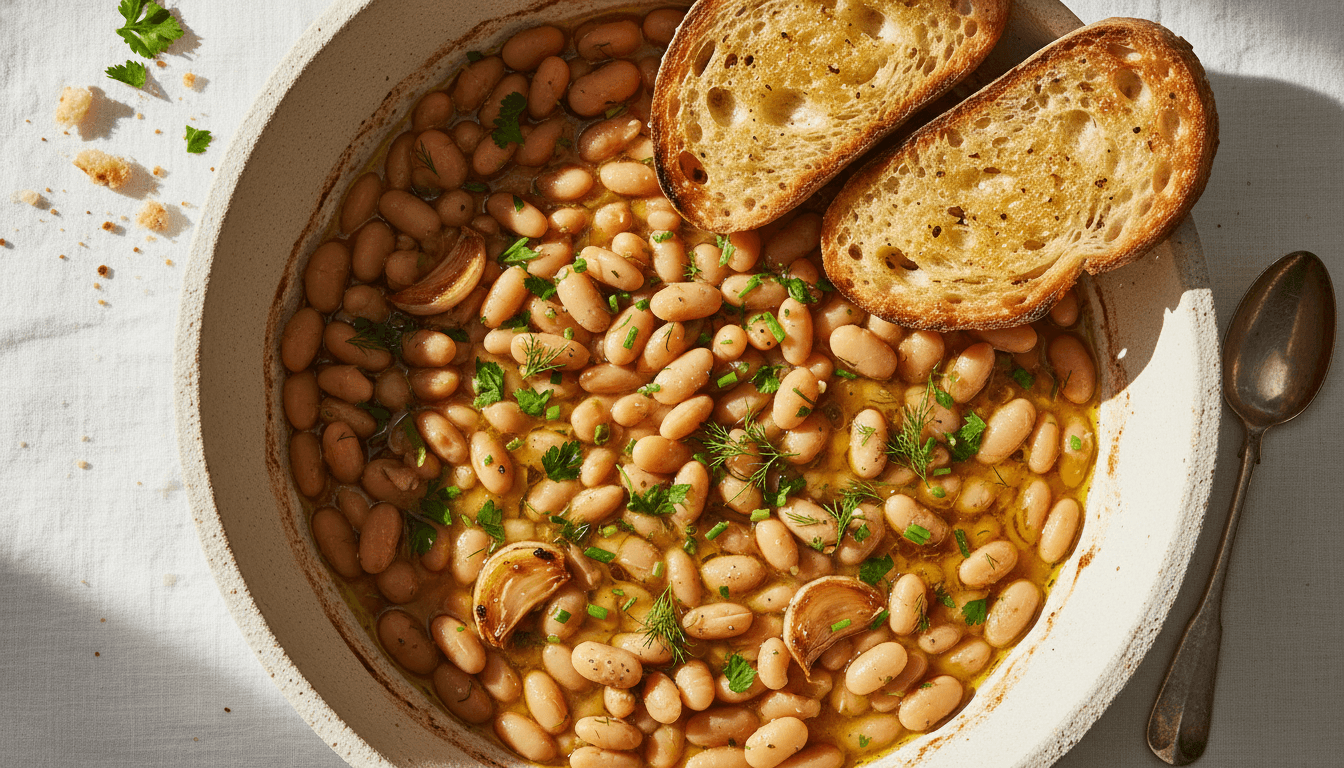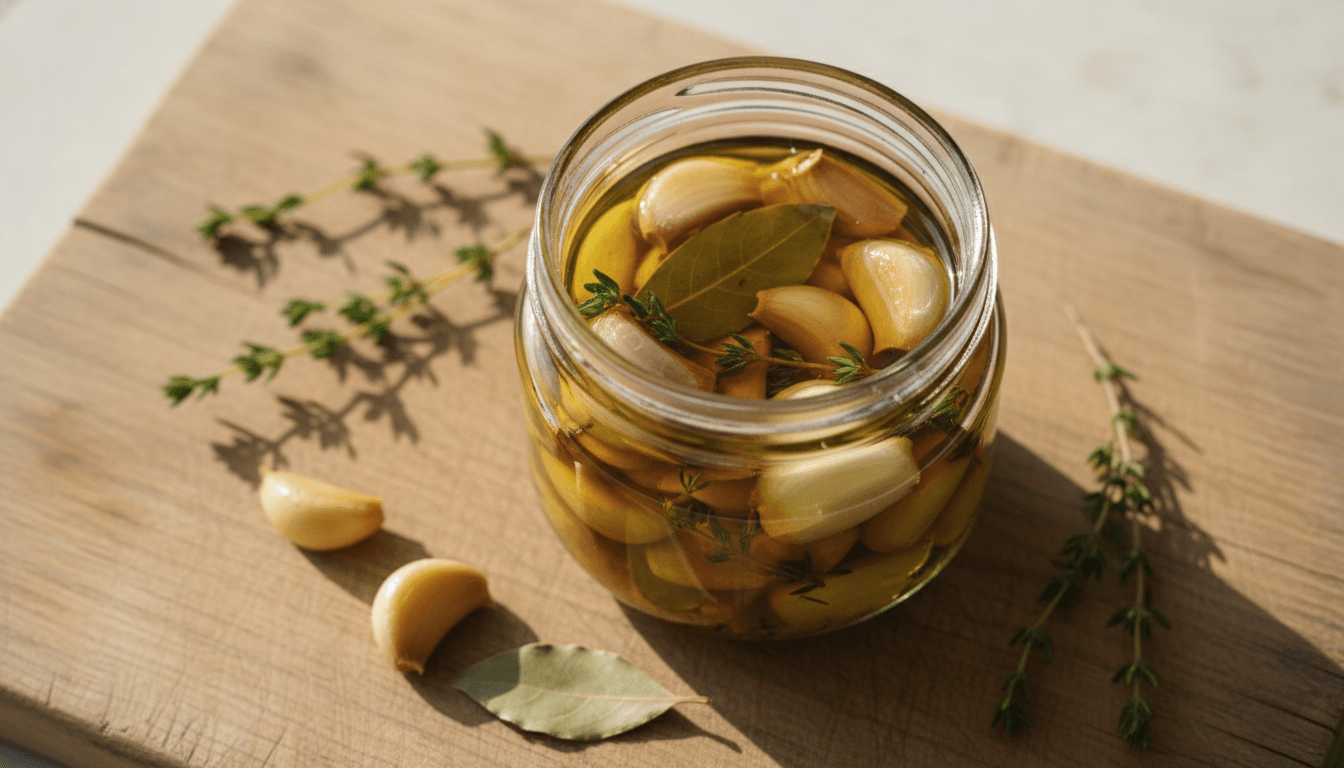


Garlic confit is the smallest pantry project that returns the most flavour. Twenty minutes to peel, an hour in the oven, two weeks in the fridge. The cloves spread on toast, smash into vinaigrette, melt into beans. The oil is its own finishing condiment.
Why this recipe works
- A low 250°F oven cooks the cloves through without browning, which would push the flavour bitter.
- Submerging completely in oil prevents oxidation and lets the cloves keep two weeks refrigerated.
- Two heads is the right scale, enough to last a week of cooking, not so much it tips over into a food-safety conversation.
Ingredients
- 2 headsgarliccloves separated and peeled
- 1 cupolive oilor enough to submerge cloves fully
- 2 sprigsthymeoptional
- 1bay leafoptional
Method
- HeatHeat oven to 250°F (120°C).
- SubmergeTip cloves into a small ovenproof dish. Add herbs. Pour olive oil to cover by half an inch.
- CookCook, uncovered, 1 hour. Cloves should be golden, soft to the spoon, never browned.
- Cool, jarCool to room temperature. Transfer to a clean jar, oil to cover, fridge.
Variations
Rosemary version
Two sprigs of rosemary instead of thyme.
Black-peppercorn version
Half a teaspoon of cracked black pepper.
Storage & make-ahead
Refrigerated only, never at room temperature. Two weeks. Discard if the oil smells off or cloves develop pink tinges.
Notes: Use a thermometer if you have one, oil should sit between 220–250°F. Brown cloves are not ruined, but their flavour pushes bitter.
Sources & further reading (3)
Larderlab provides general information for educational purposes. It is not a substitute for medical advice. Consult a registered dietitian or your healthcare provider for personalised nutrition guidance.